
Mississippi Kite
Ictinia mississippiensis
Silhouette: Andy Wilson · PhyloPic
- KingdomAnimalia (Animals)
- PhylumChordata (Chordates)
- ClassAves (Birds)
- OrderAccipitriformes (Hawks, Eagles, Kites, and Allies)
- FamilyAccipitridae (Hawks, Eagles, and Kites)
- GenusIctinia (Mississippi and Plumbeous Kites)
- SpeciesIctinia mississippiensis (Mississippi Kite)
About the Mississippi Kite
The Mississippi kite (Ictinia mississippiensis) is a small bird of prey in the family Accipitridae. Mississippi kites have narrow, pointed wings and are graceful in flight, often appearing to float in the air. It is common to see several circling in the same area.
The Mississippi kite was first named and described by the Scottish ornithologist Alexander Wilson in 1811, in the third volume of his American Ornithology. Wilson gave the kite the Latin binomial name of Falco mississippiensis: Falco means "falcon", while mississippiensis means from the Mississippi River in the United States. The current genus of Ictinia originated with Louis Pierre Vieillot's 1816 Analyse d'une nouvelle Ornithologie Elémentaire. The genus name derives from the Greek iktinos, for "kite". Wilson also gave the Mississippi kite its English-language common name. He had first observed the species in the Mississippi Territory, while the bird's long pointed wings and forked tail suggested that it was a type of kite. It is currently classified in the subfamily Buteoninae, tribe Buteonini.
The Mississippi kite measures about 12 to 15 inches (30 to 37 cm) in length, with a... Wikipedia →
Recent sightings of Mississippi Kite in Iberá National Park
LIVEiNaturalistClosest Relatives at Iberá National Park

 Plumbeous Kite
Ictinia plumbea

 Long-winged Harrier
Circus buffoni

 Roadside Hawk
Rupornis magnirostris

 Snail Kite
Rostrhamus sociabilis

 Savanna Hawk
Buteogallus meridionalis

Black-collared Hawk
Busarellus nigricollis

Great Black-Hawk
Buteogallus urubitinga

Cinereous Harrier
Circus cinereus

 White-tailed Kite
Elanus leucurus
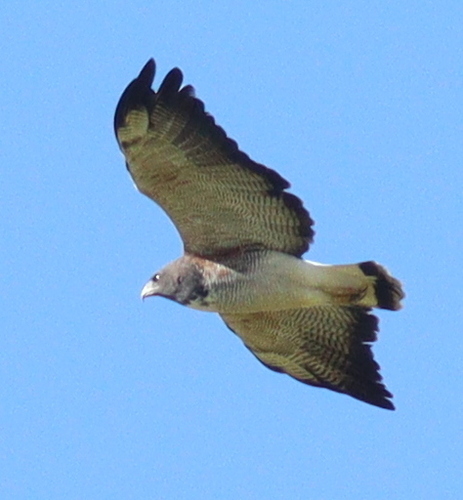
 White-tailed Hawk
Buteo albicaudatus

Black-chested Buzzard-Eagle
Geranoaetus melanoleucus

 Gray-headed Kite
Leptodon cayanensis
Global Distribution
Warmer areas are where this animal is recorded most often.
Parks Where Found
Quick answers
What are the chances of seeing a Mississippi Kite in Iberá National Park?
Under 5% of wildlife watchers report a Mississippi Kite sighting in Iberá National Park, based on 30 verified sightings from GBIF citizen-science data.
When is the best time to see Mississippi Kite in Iberá National Park?
February has the highest sighting rate for Mississippi Kite in Iberá National Park in our monthly data.