


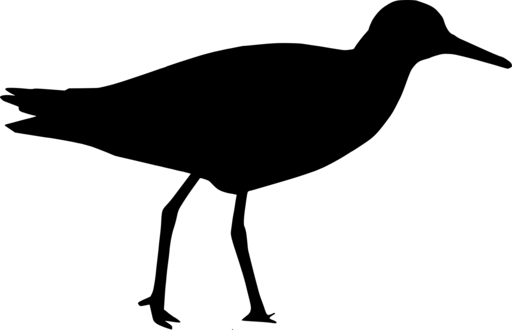
Stilt Sandpiper
Calidris himantopus
Silhouette: Edwin Price · PhyloPic
- KingdomAnimalia (Animals)
- PhylumChordata (Chordates)
- ClassAves (Birds)
- OrderCharadriiformes (Shorebirds and Allies)
- FamilyScolopacidae (Sandpipers and Allies)
- GenusCalidris (Calidris Sandpipers)
- SpeciesCalidris himantopus (Stilt Sandpiper)
About the Stilt Sandpiper
The stilt sandpiper (Calidris himantopus) is a small shorebird. The scientific name is from Ancient Greek; the genus name kalidris or skalidris is a term used by Aristotle for a gray-colored waterside bird. The specific himantopus means "strap foot" or "thong foot", and also refers to the stilt.
Formerly placed in its own monotypic genus Micropalama, DNA evidence has now shown that it is deeply embedded in the genus Calidris, where its closest relative is the curlew sandpiper, and next closest to a group of four Eurasian species, red-necked stint, spoon-billed sandpiper, Temminck's stint, and long-toed stint. Within the genus Calidris the stilt sandpiper is most closely related to the curlew sandpiper (Calidris ferruginea).
The stilt sandpiper resembles the curlew sandpiper in its long bill, long neck, pale supercilium and white rump. It is readily distinguished from that species by its straighter bill (only slightly curved, not obviously so), its longer and greenish-yellow (not black) legs, and in flight, by the lack of a wingbar. It also lacks an obvious wing bar in flight. Breeding adults are distinctive, heavily barred with blackish bars on a white... Wikipedia →
Recent sightings of Stilt Sandpiper in Olympic National Park
LIVEiNaturalistClosest Relatives at Olympic National Park

 Western Sandpiper
Calidris mauri

Least Sandpiper
Calidris minutilla

Dunlin
Calidris alpina

 Sanderling
Calidris alba

Buff-breasted Sandpiper
Calidris subruficollis

Surfbird
Calidris virgata

Semipalmated Sandpiper
Calidris pusilla

 Red Knot
Calidris canutus

Pectoral Sandpiper
Calidris melanotos

 Baird's Sandpiper
Calidris bairdii

Rock Sandpiper
Calidris ptilocnemis

 Ruff
Calidris pugnax
Global Distribution
Warmer areas are where this animal is recorded most often.
Parks Where Found
Quick answers
What are the chances of seeing a Stilt Sandpiper in Olympic National Park?
Under 5% of wildlife watchers report a Stilt Sandpiper sighting in Olympic National Park, based on 11 verified sightings from GBIF citizen-science data.
When is the best time to see Stilt Sandpiper in Olympic National Park?
September has the highest sighting rate for Stilt Sandpiper in Olympic National Park in our monthly data.