



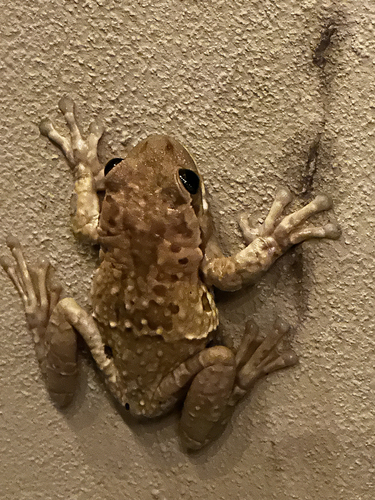
Giant Marine Toad
Rhinella horribilis
Silhouette: Dennis C. Murphy, after http://bit.ly/4q6IESe · PhyloPic
- KingdomAnimalia (Animals)
- PhylumChordata (Chordates)
- ClassAmphibia (Amphibians)
- OrderAnura (Frogs and Toads)
- FamilyBufonidae (True Toads)
- GenusRhinella (Beaked Toads)
- SpeciesRhinella horribilis (Giant Marine Toad)
About the Giant Marine Toad
Rhinella horribilis is the scientific name used for populations of the cane toad or giant toad located in Mesoamerica and north-western South America when they are considered to be a separate species from Rhinella marina, a name which is then mostly restricted to Amazon basin populations. R. horribilis was originally described from Mexico as Bufo horribilis before later being considered a synonym of Bufo marina and later Rhinella marina. The specific epithet horribilis has now been revived after a 2016 study argued that these populations make up two separate species. Wikipedia →
Recent sightings of Giant Marine Toad in Rincón de la Vieja National Park
LIVEiNaturalistClosest Relatives at Rincón de la Vieja National Park

 Dry Forest Toad
Incilius coccifer

Wet Forest Toad
Incilius melanochlorus

 Warszewitsch's Frog
Lithobates warszewitschii
 Milk Frog
Trachycephalus macrotis

 Fitzinger's Robber Frog
Craugastor fitzingeri

 Masked Tree Frog
Smilisca phaeota

 Turbo White-lipped Frog
Leptodactylus poecilochilus

Savage's Thin-toed Frog
Leptodactylus savagei

Mexican Smilisca
Smilisca baudinii

Yellow Treefrog
Dendropsophus microcephalus

 Red-eyed Treefrog
Agalychnis callidryas

Atlantic Broad-headed Litter Frog
Craugastor megacephalus
Global Distribution
Warmer areas are where this animal is recorded most often.
Parks Where Found
Quick answers
What are the chances of seeing a Giant Marine Toad in Rincón de la Vieja National Park?
About 50% of wildlife watchers report a Giant Marine Toad sighting in Rincón de la Vieja National Park, based on 31 verified sightings from GBIF citizen-science data.
When is the best time to see Giant Marine Toad in Rincón de la Vieja National Park?
August has the highest sighting rate for Giant Marine Toad in Rincón de la Vieja National Park in our monthly data.