


Forest Flame Snake
Oxyrhopus petolarius
Silhouette: Beth Reinke · PhyloPic
- KingdomAnimalia (Animals)
- PhylumChordata (Chordates)
- ClassSquamata
- FamilyColubridae (Colubrid Snakes)
- GenusOxyrhopus
- SpeciesOxyrhopus petolarius (Forest Flame Snake)
About the Forest Flame Snake
Oxyrhopus petolarius, commonly known as the forest flame snake, is a species of mildly venomous snake in the subfamily Dipsadinae of the family Colubridae. The species is native to Central and South America. There are three recognized subspecies.
According to American herpetologist Jay M. Savage (2011) the correct scientific name should be Oxyrhopus petolarius. Oxyrhopus petolarius is found in central and northern South America, including Trinidad and Tobago. The preferred natural habitats of Oxyrhopus petolarius are forest and savanna, at altitudes from sea level to 2,000 m (6,600 ft).
Adults of Oxyrhopus petolarius may attain a total length of 91 cm (36 in), which includes a tail 22 cm (8.7 in) long. Coloration is variable. It usually consists of some combination of red and black rings or crossbands. In some individuals the light-colored crossbands are white instead of red on the anterior part of the body.
The dorsal scales are smooth, with apical pits, and are arranged in 19 rows at midbody. Oxyrhopus petolarius is rear-fanged, and its venom is extremely toxic to anole lizards. ��2... Wikipedia →
Recent sightings of Forest Flame Snake in Farallones de Cali National Natural Park
LIVEiNaturalistClosest Relatives at Farallones de Cali National Natural Park

 Clark's Ground Snake
Atractus clarki

Tropical Snail-eater
Dipsas sanctijoannis
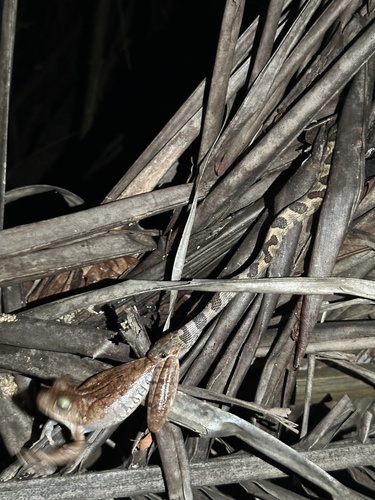
 Ornate Cat-eyed Snake
Leptodeira ornata

Cloudy Snail-eating Snake
Sibon nebulatus

Fire-bellied Snake
Erythrolamprus epinephalus

Double-banded Coral Snake Mimic
Erythrolamprus bizona

 Blunthead Tree Snake
Imantodes cenchoa

 South American Milksnake
Lampropeltis micropholis
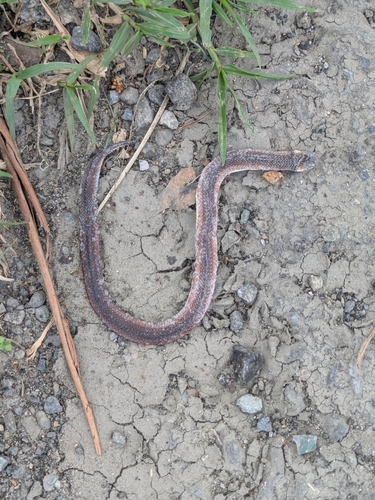
Lehmann's Ground Snake
Atractus lehmanni
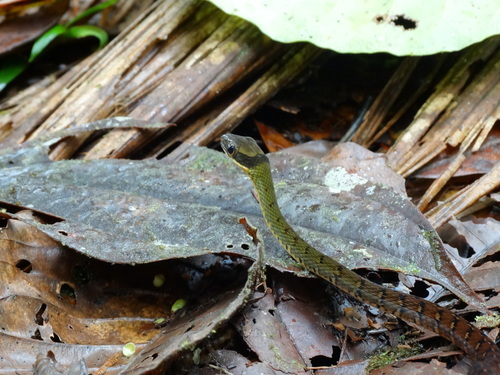
Clark's Forest Racer
Dendrophidion clarkii
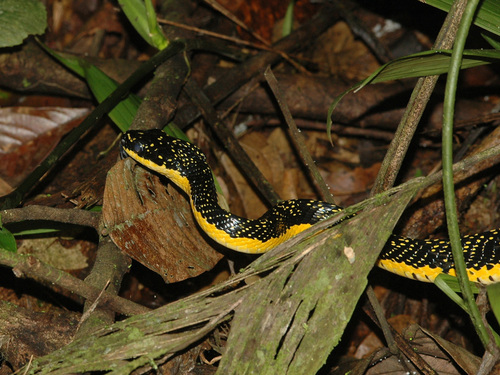
Panamanian Puffing Snake
Phrynonax shropshirei

Boddaert's Tropical Racer
Mastigodryas boddaerti
Global Distribution
Warmer areas are where this animal is recorded most often.
Parks Where Found
Quick answers
What are the chances of seeing a Forest Flame Snake in Farallones de Cali National Natural Park?
About 20% of wildlife watchers report a Forest Flame Snake sighting in Farallones de Cali National Natural Park, based on 10 verified sightings from GBIF citizen-science data.
When is the best time to see Forest Flame Snake in Farallones de Cali National Natural Park?
October has the highest sighting rate for Forest Flame Snake in Farallones de Cali National Natural Park in our monthly data.