


Forest Flame Snake
Oxyrhopus petolarius
Silhouette: Beth Reinke · PhyloPic
- KingdomAnimalia (Animals)
- PhylumChordata (Chordates)
- ClassSquamata
- FamilyColubridae (Colubrid Snakes)
- GenusOxyrhopus
- SpeciesOxyrhopus petolarius (Forest Flame Snake)
About the Forest Flame Snake
Oxyrhopus petolarius, commonly known as the forest flame snake, is a species of mildly venomous snake in the subfamily Dipsadinae of the family Colubridae. The species is native to Central and South America. There are three recognized subspecies.
According to American herpetologist Jay M. Savage (2011) the correct scientific name should be Oxyrhopus petolarius. Oxyrhopus petolarius is found in central and northern South America, including Trinidad and Tobago. The preferred natural habitats of Oxyrhopus petolarius are forest and savanna, at altitudes from sea level to 2,000 m (6,600 ft).
Adults of Oxyrhopus petolarius may attain a total length of 91 cm (36 in), which includes a tail 22 cm (8.7 in) long. Coloration is variable. It usually consists of some combination of red and black rings or crossbands. In some individuals the light-colored crossbands are white instead of red on the anterior part of the body.
The dorsal scales are smooth, with apical pits, and are arranged in 19 rows at midbody. Oxyrhopus petolarius is rear-fanged, and its venom is extremely toxic to anole lizards. ��2... Wikipedia →
Recent sightings of Forest Flame Snake in Gandoca-Manzanillo Wildlife Refuge
LIVEiNaturalistClosest Relatives at Gandoca-Manzanillo Wildlife Refuge
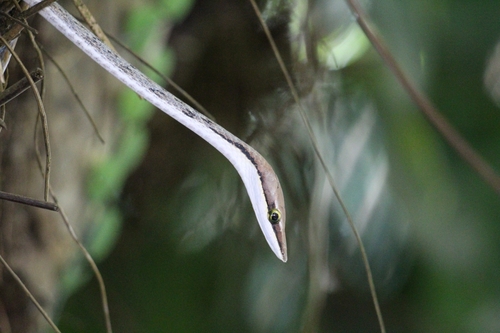
 Köhler’s Vine Snake
Oxybelis koehleri

 Blunthead Tree Snake
Imantodes cenchoa

Cloudy Snail-eating Snake
Sibon nebulatus
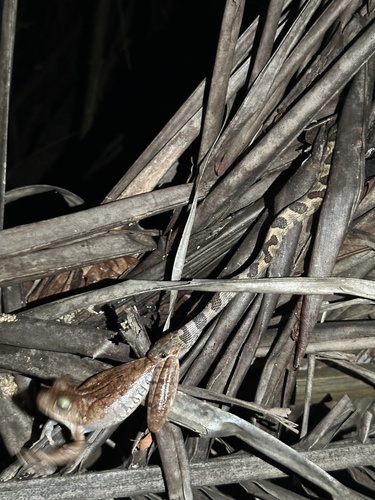
 Ornate Cat-eyed Snake
Leptodeira ornata

 Adorned Graceful Brown Snake
Rhadinaea decorata

American Snail-eater
Dipsas articulata

Yellowbelly Snake
Coniophanes fissidens

Chicken Snake
Spilotes pullatus

Puffing Snake
Phrynonax poecilonotus

Cope's Parrot Snake
Leptophis depressirostris

Western Tree Snake
Imantodes inornatus

Cope's Vine Snake
Oxybelis brevirostris
Global Distribution
Warmer areas are where this animal is recorded most often.