




Marsh Sandpiper
Tringa stagnatilis
Silhouette: Andy Wilson · PhyloPic
- KingdomAnimalia (Animals)
- PhylumChordata (Chordates)
- ClassAves (Birds)
- OrderCharadriiformes (Shorebirds and Allies)
- FamilyScolopacidae (Sandpipers and Allies)
- GenusTringa (Shanks, Tattlers, and Allies)
- SpeciesTringa stagnatilis (Marsh Sandpiper)
About the Marsh Sandpiper
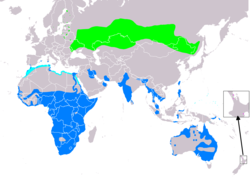
The marsh sandpiper (Tringa stagnatilis) is a small wader. It is a rather small shank, and breeds in open grassy steppe and taiga wetlands from easternmost Europe to the Russian Far East. The genus name Tringa is the Neo-Latin name given to the green sandpiper by Aldrovandus in 1599 based on Ancient Greek trungas, a thrush-sized, white-rumped, tail-bobbing wading bird mentioned by Aristotle. The specific stagnatilis is from Latin stagnum, "swamp".
The marsh sandpiper resembles a small elegant greenshank, with a long fine bill and very long yellowish legs. Like the greenshank, it is greyish brown in breeding plumage, paler in winter, and has a white wedge up its back that is visible in flight. However, it is more closely related to the common redshank and the wood sandpiper. Together, they form a group of smallish shanks which tend to have red or reddish legs, and in breeding plumage are generally a subdued, light brown above with some darker mottling, with a pattern of somewhat diffuse small brownish spots on the breast and neck. The length is 22–26 cm (8.7–10.2 in), wingspan is 55–59 cm (22–23 in) and weight is 45–120 g (1.6–4.2 oz).
The marsh sandpiper... Wikipedia →
Recent sightings of Marsh Sandpiper in Olympic National Park
LIVEiNaturalistClosest Relatives at Olympic National Park

 Greater Yellowlegs
Tringa melanoleuca

 Lesser Yellowlegs
Tringa flavipes

Wandering Tattler
Tringa incana

Solitary Sandpiper
Tringa solitaria

 Willet
Tringa semipalmata

 Black Turnstone
Arenaria melanocephala

 Hudsonian Whimbrel
Numenius hudsonicus

 Western Sandpiper
Calidris mauri

Least Sandpiper
Calidris minutilla

Dunlin
Calidris alpina

 Sanderling
Calidris alba

 Short-billed Dowitcher
Limnodromus griseus
Global Distribution
Warmer areas are where this animal is recorded most often.