



Common Black-Hawk
Buteogallus anthracinus
Silhouette: Sheatherius · PhyloPic
- KingdomAnimalia (Animals)
- PhylumChordata (Chordates)
- ClassAves (Birds)
- OrderAccipitriformes (Hawks, Eagles, Kites, and Allies)
- FamilyAccipitridae (Hawks, Eagles, and Kites)
- GenusButeogallus (Black Hawks and Allies)
- SpeciesButeogallus anthracinus (Common Black-Hawk)
About the Common Black-Hawk
The common black hawk (Buteogallus anthracinus) is a bird of prey in the family Accipitridae, which also includes the eagles, hawks, and vultures. The adult common black-hawk is 43–53 cm (17–21 in) long and weighs 930 g (33 oz) on average. It has very broad wings, and is mainly black or dark gray. The short tail is black with a single broad white band and a white tip. The bill is black and the legs and cere are yellow. The adults resemble zone-tailed hawks, but have fewer white bars on their tail and are larger in size.
Sexes are similar, but immature birds are dark brown above with spotting and streaks. Their underparts are buff to whitish with dark blotches, and the tail has a number of black and white bars. It formerly included the Cuban black-hawk (Buteogallus gundlachii) as a subspecies. The mangrove black hawk, traditionally considered a distinct species, is now generally considered a subspecies, B. a. subtilis, of the common black-hawk.
The common black-hawk is a breeding bird in the warmer parts of the Americas, from the Southwestern United States through Central America to Venezuela, Peru, Trinidad, and the Lesser... Wikipedia →
Recent sightings of Common Black-Hawk in Ría Lagartos Biosphere Reserve
LIVEiNaturalistClosest Relatives at Ría Lagartos Biosphere Reserve

 Great Black-Hawk
Buteogallus urubitinga

 Zone-tailed Hawk
Buteo albonotatus

Crane Hawk
Geranospiza caerulescens

Gray-lined Hawk
Buteo nitidus

 Roadside Hawk
Rupornis magnirostris
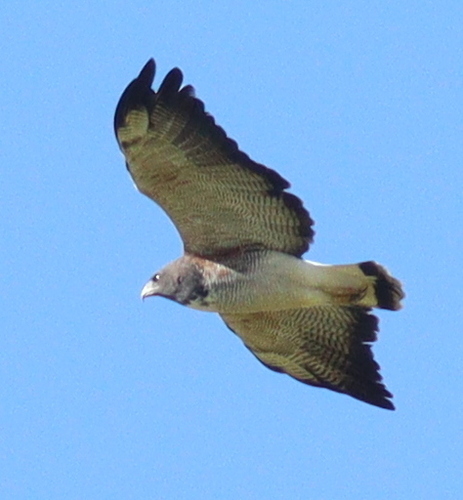
White-tailed Hawk
Buteo albicaudatus

 Snail Kite
Rostrhamus sociabilis

Short-tailed Hawk
Buteo brachyurus

 Hen Harrier
Circus cyaneus

Red-tailed Hawk
Buteo jamaicensis

 American Swallow-tailed Kite
Elanoides forficatus

 Sharp-shinned Hawk
Accipiter striatus
Global Distribution
Warmer areas are where this animal is recorded most often.
Parks Where Found
Quick answers
What are the chances of seeing a Common Black-Hawk in Ría Lagartos Biosphere Reserve?
About 50% of wildlife watchers report a Common Black-Hawk sighting in Ría Lagartos Biosphere Reserve, based on 657 verified sightings from GBIF citizen-science data.
When is the best time to see Common Black-Hawk in Ría Lagartos Biosphere Reserve?
July has the highest sighting rate for Common Black-Hawk in Ría Lagartos Biosphere Reserve in our monthly data.