


Eurasian Tree Sparrow
Passer montanus
- KingdomAnimalia (Animals)
- PhylumChordata (Chordates)
- ClassAves (Birds)
- OrderPasseriformes (Perching Birds)
- FamilyPasseridae (Old World Sparrows)
- GenusPasser (True Sparrows)
- SpeciesPasser montanus (Eurasian Tree Sparrow)
About the Eurasian Tree Sparrow
The tree sparrow (Passer montanus Latin pronunciation: [pas.ser mon.ta.nus]) is a passerine bird in the sparrow family with a rich chestnut crown and nape and a black patch on each pure white cheek. The sexes have similar plumage, and young birds are duller versions of the adult. This sparrow breeds across much of temperate Eurasia and Southeast Asia and has been introduced elsewhere, including the United States, where it is known as the Eurasian tree sparrow or German sparrow to differentiate it from the native American tree sparrow. Although several subspecies are recognised, the appearance of this bird varies little across its extensive range.
The untidy nest of the tree sparrow is built in a natural cavity, a hole in a building, or the disused nest of a European magpie or white stork. The typical clutch is five or six eggs, which hatch in under two weeks. This sparrow mainly feeds on seeds, but also consumes invertebrates, particularly during the breeding season. As with other small birds, infection by parasites and diseases, as well as predation by birds of prey, take their toll, and the typical lifespan is about two years.
The tree sparrow is widespread in the towns and cities of eastern Asia, but in Europe, it inhabits lightly wooded open countryside, while the house sparrow breeds in more urban areas. The tree sparrow's extensive range and large population mean it is not globally endangered, although there have been significant population declines in Western Europe, partly due to changes in farming practices involving increased use of herbicides and the loss of winter stubble fields. In eastern Asia and western Australia, this species is sometimes considered a pest, though it is also widely celebrated in oriental art. Wikipedia →
Closest Relatives at Tanjung Puting National Park

Malaysian Pied-Fantail
Rhipidura javanica

Black-and-red Broadbill
Cymbirhynchus macrorhynchos

Olive-winged Bulbul
Pycnonotus plumosus
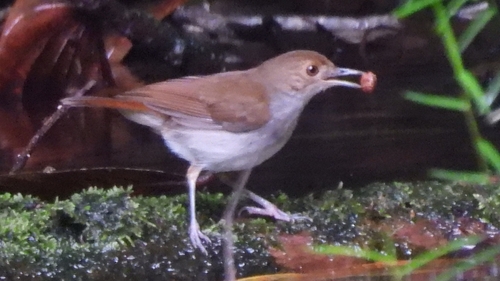
White-chested Babbler
Trichastoma rostratum

Little Spiderhunter
Arachnothera longirostra

Slender-billed Crow
Corvus enca

Van Hasselt's Sunbird
Leptocoma brasiliana

Malaysian Blue-Flycatcher
Cyornis turcosus

Greater Racket-tailed Drongo
Dicrurus paradiseus

Black-winged Flycatcher-shrike
Hemipus hirundinaceus

Green Iora
Aegithina viridissima

Fiery Minivet
Pericrocotus igneus
Global Distribution
Where this species is recorded worldwide. Restricted to human observations from 2019 onwards — the same kind of record and the same period the probabilities on this page are built from, so collar-tracking studies, camera-trap arrays and museum specimens are excluded. Around Santa Rosa that removes 5,924 GPS fixes from a handful of tagged jaguars.
where this species is recorded (GBIF density — it tracks where observers go, not how likely a sighting is) · parks where it occurs — tap a pin for the sighting probability there
Parks Where Found
Quick answers
What are the chances of seeing a Eurasian Tree Sparrow in Tanjung Puting National Park?
About 10% of wildlife watchers report a Eurasian Tree Sparrow sighting in Tanjung Puting National Park, based on 8 verified sightings from GBIF citizen-science data.
When is the best time to see Eurasian Tree Sparrow in Tanjung Puting National Park?
July has the highest sighting rate for Eurasian Tree Sparrow in Tanjung Puting National Park in our monthly data.