


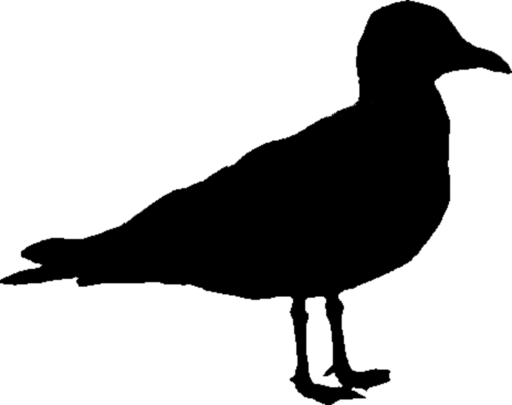
Black-headed Gull
Chroicocephalus ridibundus
Silhouette: Hans Hillewaert · PhyloPic
- KingdomAnimalia (Animals)
- PhylumChordata (Chordates)
- ClassAves (Birds)
- OrderCharadriiformes (Shorebirds and Allies)
- FamilyLaridae (Gulls, Terns, and Skimmers)
- GenusChroicocephalus (Masked Gulls and allies)
- SpeciesChroicocephalus ridibundus (Black-headed Gull)
About the Black-headed Gull
The black-headed gull (Chroicocephalus ridibundus) is a small gull that breeds in much of the Palearctic in Europe and Asia, and also locally in smaller numbers in coastal eastern Canada. Most of the population is migratory and winters further south, but many also remain in the milder areas of northwestern Europe. It was formerly sometimes cited as "common black-headed gull" to distinguish it from "great black-headed gull" (an old name for Pallas's gull).
The genus name Chroicocephalus is from the Ancient Greek words khroizo, "to colour", and kephale, "head". The specific name ridibundus is Latin for "laughing". The black-headed gull was formally described in 1766 by the Swedish naturalist Carl Linnaeus in the twelfth edition of his Systema Naturae. He placed it with the other gulls in the genus Larus and coined the binomial name Larus ridibundus. Linnaeus specified the locality as Mari Europaeo or European seas.
Genetic studies published early in the 21st century showed that the genus Larus was paraphyletic with respect to other gull genera, and extensive changes to the taxonomy of gulls were made with many species of gull removed from Larus and transferred to other... Wikipedia →
Recent sightings of Black-headed Gull in Cévennes National Park
LIVEiNaturalistClosest Relatives at Cévennes National Park

 Yellow-legged Gull
Larus michahellis

Lesser Black-backed Gull
Larus fuscus

 Gull-billed Tern
Gelochelidon nilotica

 Eurasian Stone-curlew
Burhinus oedicnemus

 Black-bellied Plover
Pluvialis squatarola

 Common Greenshank
Tringa nebularia

Jack Snipe
Lymnocryptes minimus

 Eurasian Dotterel
Charadrius morinellus

 Common Sandpiper
Actitis hypoleucos

Green Sandpiper
Tringa ochropus

Wood Sandpiper
Tringa glareola

Spotted Redshank
Tringa erythropus
Global Distribution
Warmer areas are where this animal is recorded most often.