


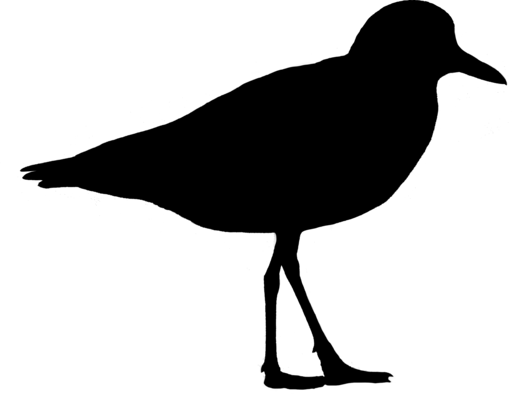
Black-bellied Plover
Pluvialis squatarola
Silhouette: Emily Willoughby · PhyloPic
- KingdomAnimalia (Animals)
- PhylumChordata (Chordates)
- ClassAves (Birds)
- OrderCharadriiformes (Shorebirds and Allies)
- FamilyCharadriidae (Plovers and Lapwings)
- GenusPluvialis (Golden Plovers and Grey Plover)
- SpeciesPluvialis squatarola (Black-bellied Plover)
About the Black-bellied Plover
The grey plover or black-bellied plover (Pluvialis squatarola) is a large plover breeding in Arctic regions. It is a long-distance migrant, with a nearly worldwide coastal distribution when not breeding. The grey plover was formally described by the Swedish naturalist Carl Linnaeus in 1758 in the tenth edition of his Systema Naturae under the binomial name Tringa squatarola. It is now placed with three other plovers in the genus Pluvialis that was introduced by the French ornithologist Mathurin Jacques Brisson in 1760. The genus name is Latin and means relating to rain, from pluvia, "rain". It was believed that they flocked when rain was imminent. The species name squatarola is a Latinised version of Sgatarola, a Venetian name for some kind of plover.
The English common name used for this species differs in different parts of the world. It is generally known as "grey plover" in the Old World and "black-bellied plover" in the New World. Three subspecies are recognised:
P. s. squatarola (Linnaeus, 1758) – breeds in north Eurasia and Alaska; non-breeding in west, south Europe, Africa, south, east Asia and Australasia and west Americas P. s. tomkovichi Engelmoer & Roselaar... Wikipedia →
Recent sightings of Black-bellied Plover in Cévennes National Park
LIVEiNaturalistClosest Relatives at Cévennes National Park

 Eurasian Dotterel
Charadrius morinellus

 Northern Lapwing
Vanellus vanellus

 Eurasian Stone-curlew
Burhinus oedicnemus

 Yellow-legged Gull
Larus michahellis

 Common Greenshank
Tringa nebularia

Lesser Black-backed Gull
Larus fuscus

 Jack Snipe
Lymnocryptes minimus

 Common Sandpiper
Actitis hypoleucos

Green Sandpiper
Tringa ochropus

 Black-headed Gull
Chroicocephalus ridibundus

Wood Sandpiper
Tringa glareola

Spotted Redshank
Tringa erythropus
Global Distribution
Warmer areas are where this animal is recorded most often.