



Savanna Hawk
Buteogallus meridionalis
Silhouette: Sheatherius · PhyloPic
- KingdomAnimalia (Animals)
- PhylumChordata (Chordates)
- ClassAves (Birds)
- OrderAccipitriformes (Hawks, Eagles, Kites, and Allies)
- FamilyAccipitridae (Hawks, Eagles, and Kites)
- GenusButeogallus (Black Hawks and Allies)
- SpeciesButeogallus meridionalis (Savanna Hawk)
About the Savanna Hawk
The savanna hawk (Buteogallus meridionalis) is a large raptor found in open savanna and swamp edges. It was formerly placed in the genus Heterospizias. It breeds from Panama and Trinidad south to Bolivia, Uruguay and central Argentina. There are also reports of it in California, from 1973 in Alameda County and from 1974 in San Diego County.
The savanna hawk is 46–61 cm (18–24 in) in length and weighs 845 g (29.8 oz). The adult has a rufous body with grey mottling above and fine black barring below. The flight feathers of the long broad wings are black, and the tail is banded black and white. The legs are yellow. The call is a loud scream keeeeru.
Immature birds are similar to the adults but have darker, duller upperparts, paler underparts with coarser barring, and a whitish supercilium. This species perches very vertically, and its legs are strikingly long. The savanna hawk feeds on small mammals, small birds, lizards, snakes, toads, frogs, eels, other fish, crabs, roots, spiders, and large insects (such as grasshoppers). It usually sits on an open high perch from which it swoops on its prey, but will also hunt on foot, and several birds may... Wikipedia →
Recent sightings of Savanna Hawk in El Palmar National Park
LIVEiNaturalistClosest Relatives at El Palmar National Park

 Great Black-Hawk
Buteogallus urubitinga

 Roadside Hawk
Rupornis magnirostris

 Harris' Hawk
Parabuteo unicinctus

 Swainson's Hawk
Buteo swainsoni

Crane Hawk
Geranospiza caerulescens

Black-collared Hawk
Busarellus nigricollis

 Sharp-shinned Hawk
Accipiter striatus

 Snail Kite
Rostrhamus sociabilis

 Long-winged Harrier
Circus buffoni

 Mississippi Kite
Ictinia mississippiensis
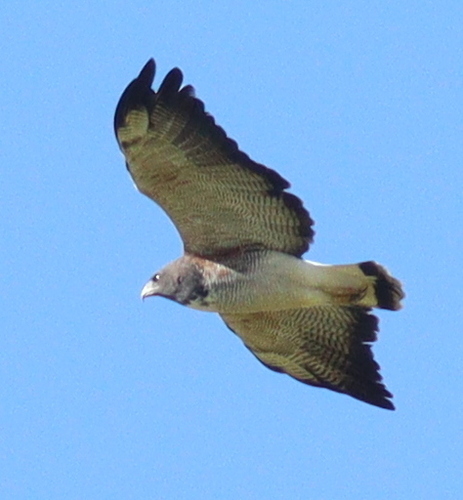
White-tailed Hawk
Buteo albicaudatus

 Turkey Vulture
Cathartes aura
Global Distribution
Warmer areas are where this animal is recorded most often.
Parks Where Found
Quick answers
What are the chances of seeing a Savanna Hawk in El Palmar National Park?
Under 5% of wildlife watchers report a Savanna Hawk sighting in El Palmar National Park, based on 6 verified sightings from GBIF citizen-science data.
When is the best time to see Savanna Hawk in El Palmar National Park?
October has the highest sighting rate for Savanna Hawk in El Palmar National Park in our monthly data.