



Great Black-Hawk
Buteogallus urubitinga
Silhouette: Sheatherius · PhyloPic
- KingdomAnimalia (Animals)
- PhylumChordata (Chordates)
- ClassAves (Birds)
- OrderAccipitriformes (Hawks, Eagles, Kites, and Allies)
- FamilyAccipitridae (Hawks, Eagles, and Kites)
- GenusButeogallus (Black Hawks and Allies)
- SpeciesButeogallus urubitinga (Great Black-Hawk)
About the Great Black-Hawk
The great black hawk (Buteogallus urubitinga) is a bird of prey in the family Accipitridae, which also includes the eagles, hawks, and Old World vultures. The great black hawk was formally described in 1788 by the German naturalist Johann Friedrich Gmelin in his revised and expanded edition of Carl Linnaeus's Systema Naturae. He placed it with the eagles, hawks and relatives in the genus Falco and coined the binomial name Falco urubitinga. Gmelin's description was ultimately based on the "urubitinga" that had been described in 1648 by the German naturalist Georg Marcgrave in his Historia Naturalis Brasiliae. The great black hawk is now one of nine species placed in the genus Buteogallus was introduced in 1830 by the French naturalist René Lesson. The name genus is a portmanteau of Buteo, a genus introduced in 1779 by Bernard Germain de Lacépède for the buzzards and the genus Gallus introduced in 1760 by Mathurin Jacques Brisson for the junglefowl. The specific epithet urubitinga is from Tupi Urubú tinga meaning "big black bird" for such a raptor.
Two subspecies are recognised: B. u. ridgwayi (Gurney, JH Sr, 1884) – Mexico to west Panama B. u. urubitinga (Gmelin, JF... Wikipedia →
Recent sightings of Great Black-Hawk in El Palmar National Park
LIVEiNaturalistClosest Relatives at El Palmar National Park

 Savanna Hawk
Buteogallus meridionalis

 Roadside Hawk
Rupornis magnirostris

 Harris' Hawk
Parabuteo unicinctus

 Swainson's Hawk
Buteo swainsoni

Crane Hawk
Geranospiza caerulescens

Black-collared Hawk
Busarellus nigricollis

 Sharp-shinned Hawk
Accipiter striatus

 Snail Kite
Rostrhamus sociabilis

 Long-winged Harrier
Circus buffoni

 Mississippi Kite
Ictinia mississippiensis
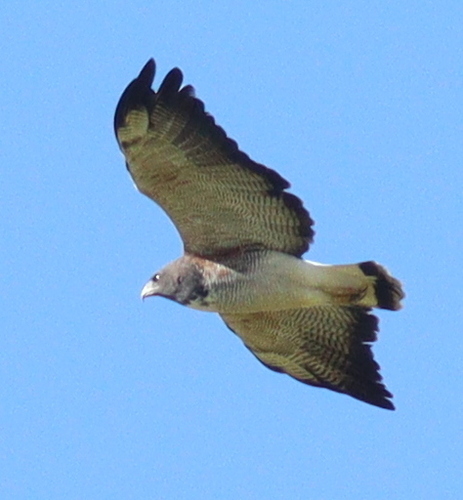
White-tailed Hawk
Buteo albicaudatus

 Turkey Vulture
Cathartes aura
Global Distribution
Warmer areas are where this animal is recorded most often.
Parks Where Found
Quick answers
What are the chances of seeing a Great Black-Hawk in El Palmar National Park?
Under 5% of wildlife watchers report a Great Black-Hawk sighting in El Palmar National Park, based on 17 verified sightings from GBIF citizen-science data.
When is the best time to see Great Black-Hawk in El Palmar National Park?
February has the highest sighting rate for Great Black-Hawk in El Palmar National Park in our monthly data.