



Northern Fiscal
Lanius humeralis
Silhouette: Andy Wilson · PhyloPic
- KingdomAnimalia (Animals)
- PhylumChordata (Chordates)
- ClassAves (Birds)
- OrderPasseriformes (Perching Birds)
- FamilyLaniidae (Shrikes)
- GenusLanius (Typical Shrikes)
- SpeciesLanius humeralis (Northern Fiscal)
About the Northern Fiscal
The northern fiscal (Lanius humeralis) is a member of the shrike family found through most of Sub-Saharan Africa. It used to be grouped with the southern fiscal (Lanius collaris). Together they were called the common fiscal. The fiscal gets its English and Afrikaans common names from its black and white 'suit-and-tie' appearance reminiscent of the taxman (‘fiscal’).
This is a fairly distinctive 21–23 cm long passerine with white underparts and black upperparts extending from the top of the head down to the tail. The bird has a characteristic white 'V' on the back and a relatively long black tail with white outer feathers and white tips on the other feathers. The bill, eyes and legs are black. Adult male and female northern fiscals are quite similar except for the rufous lower flank of the female.
Listed alphabetically. L. h. capelli (Bocage, 1879) – S Gabon and S PRCongo E to S DRCongo, extreme SW Uganda, Rwanda and Burundi, and S to Angola L. h. humeralis Stanley, 1814 – C Eritrea, C & S Ethiopia, SE South Sudan, E Uganda, W Kenya, Tanzania, N Malawi, and N Mozambique; probably also NE Zambia
L. h. smithii (Fraser, 1843) – S Mauritania (rare... Wikipedia →
Recent sightings of Northern Fiscal in Semuliki National Park
LIVEiNaturalistClosest Relatives at Semuliki National Park

 Grey-backed Fiscal
Lanius excubitoroides

 Red-backed Shrike
Lanius collurio

Mackinnon's Shrike
Lanius mackinnoni

 Crested Malimbe
Malimbus malimbicus

 Red-tailed Greenbul
Criniger calurus

Western Nicator
Nicator chloris

 Fraser's Rufous Thrush
Stizorhina fraseri
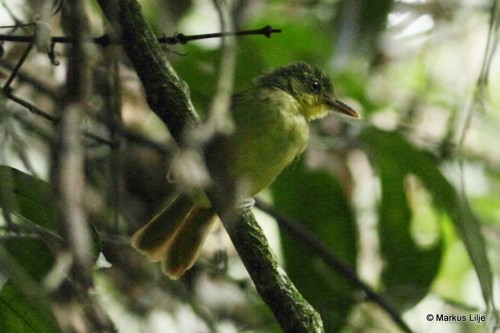
Xavier's Greenbul
Phyllastrephus xavieri

Red-tailed Ant-Thrush
Neocossyphus rufus

 Common Bulbul
Pycnonotus barbatus

Little Greenbul
Eurillas virens

 Black-headed Paradise-Flycatcher
Terpsiphone rufiventer
Global Distribution
Warmer areas are where this animal is recorded most often.