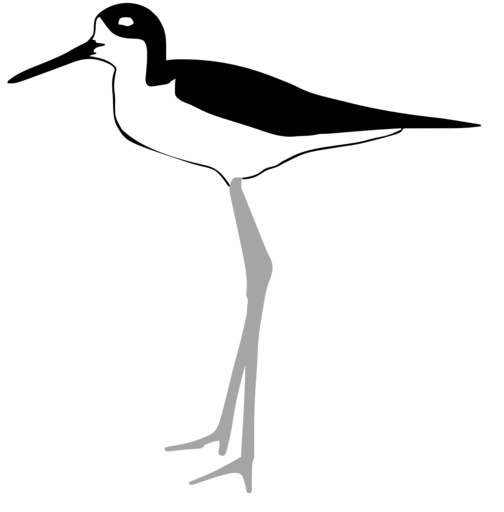
Black-necked Stilt

Black-necked Stilt

Himantopus mexicanus

Silhouette: Edwin Price · PhyloPic

Daily sighting probability ~10% · With luck
at Death Valley National Park
304 Verified sightings at Death Valley National Park From 2019 to 2026
10,692 Verified sightings across all 68 parks From 2019 to 2026
August Best month highest sighting rate
☀️ Diurnal When it's spotted during daytime hours (6am–6pm)

About the Black-necked Stilt

The black-necked stilt (Himantopus mexicanus), also called the pied stilt, is a locally abundant shorebird of North and South American wetlands and coastlines. It is found from the coastal areas of California through much of the interior western United States and along the Gulf of Mexico as far east as Florida, then south through Central America and the Caribbean to Brazil, Peru and the Galápagos Islands, with an isolated population, the Hawaiian stilt, in Hawaii. The northernmost populations, particularly those from inland, are migratory, wintering from the extreme south of the United States to southern Mexico, rarely as far south as Costa Rica; on the Baja California peninsula it is only found regularly in winter. Some authorities, including the IUCN, treat it as a synonym of Himantopus himantopus.

The black-necked stilt was formally described in 1776 as Charadrius mexicanus by the German zoologist Philipp Statius Müller. The species is now placed in the genus Himantopus that was introduced in 1760 by the French ornithologist Mathurin Jacques Brisson.

Three subspecies are recognised: H. m. knudseni Stejneger, LH, 1887 – main Hawaiian Islands H. m. mexicanus (Müller... Wikipedia →

Global Distribution

Warmer areas are where this animal is recorded most often.

Parks Where Found

# Park Country Daily sighting probability
1 Celestún Biosphere Reserve 🇲🇽 Mexico
~50%
2 Ría Lagartos Biosphere Reserve 🇲🇽 Mexico
~50%
3 Palo Verde National Park 🇨🇷 Costa Rica
~50%
4 Jaragua National Park 🇩🇴 Dominican Republic
~40%
5 Iberá National Park 🇦🇷 Argentina
~30%
6 Arrecifes de Cozumel National Park 🇲🇽 Mexico
~20%
7 Galápagos Islands 🇪🇨 Ecuador
~20%
8 El Vizcaíno Biosphere Reserve 🇲🇽 Mexico
~20%
9 Lago de Yojoa 🇭🇳 Honduras
~20%
10 Ciénaga de Zapata 🇨🇺 Cuba
~20%
11 Cordillera Azul National Park 🇵🇪 Peru
~20%
12 Machalilla National Park 🇪🇨 Ecuador
~10%
13 Caroni Swamp 🇹🇹 Trinidad and Tobago
~10%
14 Cerro Azul Meámbar National Park 🇭🇳 Honduras
~10%
15 Los Haitises National Park 🇩🇴 Dominican Republic
~10%
16 Cañón del Sumidero National Park 🇲🇽 Mexico
~10%
17 El Impenetrable National Park 🇦🇷 Argentina
~10%
18 Paracas National Reserve 🇵🇪 Peru
~10%
19 Everglades National Park 🇺🇸 United States
~10%
20 Carara National Park 🇨🇷 Costa Rica
~10%
21 Tortuguero National Park 🇨🇷 Costa Rica
~10%
22 Santa Rosa National Park 🇨🇷 Costa Rica
<5%
23 Montes Azules Biosphere Reserve 🇲🇽 Mexico
<5%
24 Big Cypress National Preserve 🇺🇸 United States
<5%
25 Cahuita National Park 🇨🇷 Costa Rica
<5%
26 Henri Pittier National Park 🇻🇪 Venezuela
<5%
27 Tayrona National Natural Park 🇨🇴 Colombia
<5%
28 La Amistad International Park (Panama) 🇵🇦 Panama
<5%
29 Calakmul Biosphere Reserve 🇲🇽 Mexico
<5%
30 Gandoca-Manzanillo Wildlife Refuge 🇨🇷 Costa Rica
<5%
31 Sian Ka'an Biosphere Reserve 🇲🇽 Mexico
<5%
32 Bastimentos Island National Marine Park 🇵🇦 Panama
<5%
33 Saguaro National Park 🇺🇸 United States
<5%
34 Parque Estadual Encontro das Águas 🇧🇷 Brazil
<5%
35 Chagres National Park 🇵🇦 Panama
<5%
36 Las Baulas Marine National Park 🇨🇷 Costa Rica
<5%
37 Soberanía National Park 🇵🇦 Panama
<5%
38 Manuel Antonio National Park 🇨🇷 Costa Rica
<5%
39 Corcovado National Park 🇨🇷 Costa Rica
<5%
40 Joshua Tree National Park 🇺🇸 United States
<5%
41 Piedras Blancas National Park 🇨🇷 Costa Rica
<5%
42 Iguaçu National Park 🇧🇷 Brazil
<5%
43 Arenal Volcano National Park 🇨🇷 Costa Rica
<5%
44 Iguazú National Park 🇦🇷 Argentina
<5%
45 Darién National Park 🇵🇦 Panama
<5%
46 Península Valdés 🇦🇷 Argentina
Insufficient data
47 Tapantí-Macizo de la Muerte National Park 🇨🇷 Costa Rica
Insufficient data
48 El Palmar National Park 🇦🇷 Argentina
Insufficient data
49 Emas National Park 🇧🇷 Brazil
Insufficient data
50 Ostional Wildlife Refuge 🇨🇷 Costa Rica
Insufficient data
51 Bahía de Loreto National Park 🇲🇽 Mexico
Insufficient data
52 Biotopo Cerro Cahuí 🇬🇹 Guatemala
Insufficient data
53 Sierra de la Macarena National Park 🇨🇴 Colombia
Insufficient data
54 Amacayacu National Natural Park 🇨🇴 Colombia
Insufficient data
55 Huascarán National Park 🇵🇪 Peru
Insufficient data
56 Tijuca National Park 🇧🇷 Brazil
Insufficient data
57 Serra da Canastra National Park 🇧🇷 Brazil
Insufficient data
58 Vicente Pérez Rosales National Park 🇨🇱 Chile
Insufficient data
59 Chapada Diamantina National Park 🇧🇷 Brazil
Insufficient data
60 Nahuel Huapi National Park 🇦🇷 Argentina
Insufficient data
61 Marino Ballena National Park 🇨🇷 Costa Rica
Insufficient data
62 Cabo Blanco Absolute Nature Reserve 🇨🇷 Costa Rica
Insufficient data
63 Parque Natural Metropolitano 🇵🇦 Panama
Insufficient data
64 Rincón de la Vieja National Park 🇨🇷 Costa Rica
Insufficient data
65 Tikal National Park 🇬🇹 Guatemala
Insufficient data
66 Tambopata National Reserve 🇵🇪 Peru
Insufficient data
67 Farallones de Cali National Natural Park 🇨🇴 Colombia
Insufficient data
68 Tenorio Volcano National Park 🇨🇷 Costa Rica
Insufficient data

Quick answers

What are the chances of seeing a Black-necked Stilt in Death Valley National Park?

About 10% of wildlife watchers report a Black-necked Stilt sighting in Death Valley National Park, based on 304 verified sightings from GBIF citizen-science data.

When is the best time to see Black-necked Stilt in Death Valley National Park?

August has the highest sighting rate for Black-necked Stilt in Death Valley National Park in our monthly data.

← Back to Death Valley National Park