


White-winged Tern
Chlidonias leucopterus
- KingdomAnimalia (Animals)
- PhylumChordata (Chordates)
- ClassAves (Birds)
- OrderCharadriiformes (Shorebirds and Allies)
- FamilyLaridae (Gulls, Terns, and Skimmers)
- GenusChlidonias (Marsh Terns)
- SpeciesChlidonias leucopterus (White-winged Tern)
About the White-winged Tern
The white-winged tern or white-winged black tern (Chlidonias leucopterus) is a species of tern in the family Laridae. It is a small species generally found in or near bodies of fresh water across much of the world, including Europe, Africa, Asia, and Australia. The genus name is from Ancient Greek khelidonios, "swallow-like", from khelidon, "swallow".
The name 'white-winged tern' is the standard in most English-speaking countries; in the United Kingdom, this name is also the one used by the formal ornithological recording authorities, but the older alternative 'white-winged black tern' is still frequent in popular use.
Adult birds in summer have short red legs and a short black bill (small and stubby, measuring 22–25 mm from the feathers, decidedly shorter than the head), a black neck (often with a pale gray back) and belly, very dark grey back, with a white rump and light grey (almost white) tail, which often looks 'square' in juveniles. The face is tinged yellowish. The wings, as the name implies, are mainly white. The inner wing is grayish with brown-tipped coverts. In non-breeding plumage, most of the black is replaced by white or pale grey, though a few blackish... Wikipedia →
Closest Relatives at Tangkoko Nature Reserve

Whiskered Tern
Chlidonias hybrida

Black-naped Tern
Sterna sumatrana

Common Tern
Sterna hirundo

Little Tern
Sternula albifrons
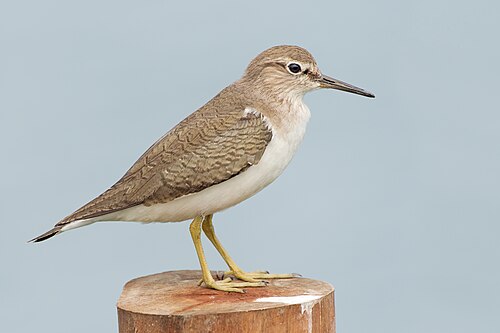
Common Sandpiper
Actitis hypoleucos

Kentish Plover
Charadrius alexandrinus

Whimbrel
Numenius phaeopus

Beach Thick-knee
Esacus magnirostris

Barred Buttonquail
Turnix suscitator

White-headed Stilt
Himantopus leucocephalus

Black-bellied Plover
Pluvialis squatarola

Grey-tailed Tattler
Tringa brevipes
Global Distribution
Where this species is recorded worldwide. Restricted to human observations from 2019 onwards — the same kind of record and the same period the probabilities on this page are built from, so collar-tracking studies, camera-trap arrays and museum specimens are excluded. Around Santa Rosa that removes 5,924 GPS fixes from a handful of tagged jaguars.
where this species is recorded (GBIF density — it tracks where observers go, not how likely a sighting is) · parks where it occurs — tap a pin for the sighting probability there