


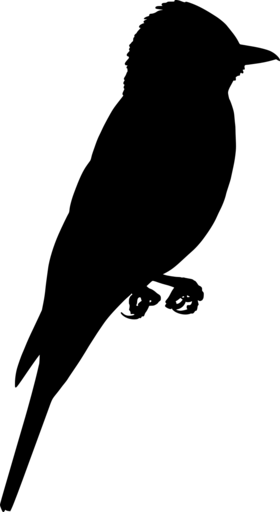
Fork-tailed Flycatcher
Tyrannus savana
Silhouette: Andy Wilson · PhyloPic
- KingdomAnimalia (Animals)
- PhylumChordata (Chordates)
- ClassAves (Birds)
- OrderPasseriformes (Perching Birds)
- FamilyTyrannidae (Tyrant Flycatchers)
- GenusTyrannus (Kingbirds)
- SpeciesTyrannus savana (Fork-tailed Flycatcher)
About the Fork-tailed Flycatcher
The fork-tailed flycatcher (Tyrannus savana) is a passerine bird of the tyrant flycatcher family and is a member of a genus typically referred to as kingbirds. Named for the long, forked tail, particularly in males, fork-tailed flycatchers are seen in shrubland, savanna, lightly forested and grassland areas, from southern Mexico to Argentina. They are frequently observed on conspicuous perches whence they sally after insect prey. Northern populations near southern Mexico tend to be permanent residents, while fork-tailed flycatchers that live further south are migrants with a reputation for wandering as far north as New Brunswick, Canada.
The fork-tailed flycatcher was described in 1760 by Mathurin Jacques Brisson under the French name "le tyran à queue fourchue" (lit. 'the fork-tailed tyrant') and then again in 1780 by Georges-Louis Buffon under the name "le savana" (because it lived in savannahs), but it was not until 1802 that François Marie Daudin coined the binomial name Tyrannus savana. The type locality is Suriname.
Four subspecies are recognised: Tyrannus savana monachus Hartlaub, 1844 – southern Mexico to Colombia, the Guianas, and northern Brazil Tyrannus savana... Wikipedia →
Recent sightings of Fork-tailed Flycatcher in Amacayacu National Natural Park
LIVEiNaturalistClosest Relatives at Amacayacu National Natural Park

 Tropical Kingbird
Tyrannus melancholicus

White-throated Kingbird
Tyrannus albogularis

Eastern Kingbird
Tyrannus tyrannus

 Great Kiskadee
Pitangus sulphuratus

 Yellow-crowned Tyrannulet
Tyrannulus elatus

Spotted Tody-Flycatcher
Todirostrum maculatum

Social Flycatcher
Myiozetetes similis

Slender-footed Tyrannulet
Zimmerius gracilipes

Boat-billed Flycatcher
Megarynchus pitangua

 Short-crested Flycatcher
Myiarchus ferox

Piratic Flycatcher
Legatus leucophaius

Lesser Kiskadee
Pitangus lictor
Global Distribution
Warmer areas are where this animal is recorded most often.
Parks Where Found
Quick answers
What are the chances of seeing a Fork-tailed Flycatcher in Amacayacu National Natural Park?
Under 5% of wildlife watchers report a Fork-tailed Flycatcher sighting in Amacayacu National Natural Park, based on 58 verified sightings from GBIF citizen-science data.
When is the best time to see Fork-tailed Flycatcher in Amacayacu National Natural Park?
March has the highest sighting rate for Fork-tailed Flycatcher in Amacayacu National Natural Park in our monthly data.