


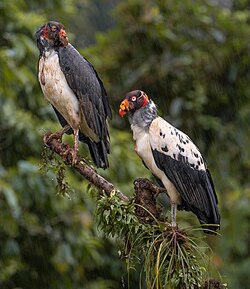

King Vulture
Sarcoramphus papa
Silhouette: Andy Wilson · PhyloPic
- KingdomAnimalia (Animals)
- PhylumChordata (Chordates)
- ClassAves (Birds)
- OrderAccipitriformes (Hawks, Eagles, Kites, and Allies)
- FamilyCathartidae (New World Vultures)
- GenusSarcoramphus
- SpeciesSarcoramphus papa (King Vulture)
About the King Vulture
The king vulture (Sarcoramphus papa) is a large bird found in Central and South America. It is a member of the New World vulture family Cathartidae. This vulture lives predominantly in tropical lowland forests stretching from southern Mexico to northern Argentina. It is the only surviving member of the genus Sarcoramphus, although fossil members are known.
Large and predominantly white, the king vulture has gray to black ruff, flight, and tail feathers. The head and neck are bald, with the skin color varying, including yellow, orange, blue, purple, and red. The king vulture has a noticeable orange fleshy caruncle on its beak. This vulture is a scavenger and it often makes the initial cut into a fresh carcass. It also displaces smaller New World vulture species from a carcass. King vultures have been known to live for up to 30 years in captivity.
King vultures were popular figures in the Mayan codices as well as in local folklore and medicine. Although currently listed as Least Concern by the IUCN, they are decreasing in number, due primarily to habitat loss. The king vulture was originally described by Carl Linnaeus in 1758 in the tenth edition... Wikipedia →
Recent sightings of King Vulture in Cuyabeno Wildlife Reserve
LIVEiNaturalistClosest Relatives at Cuyabeno Wildlife Reserve

 Black Vulture
Coragyps atratus

 Greater Yellow-headed Vulture
Cathartes melambrotus

Turkey Vulture
Cathartes aura

Lesser Yellow-headed Vulture
Cathartes burrovianus

 Roadside Hawk
Rupornis magnirostris

 Plumbeous Kite
Ictinia plumbea

 American Swallow-tailed Kite
Elanoides forficatus

 Slate-colored Hawk
Leucopternis schistaceus

Double-toothed Kite
Harpagus bidentatus

Slender-billed Kite
Helicolestes hamatus

 Snail Kite
Rostrhamus sociabilis

 Osprey
Pandion haliaetus
Global Distribution
Warmer areas are where this animal is recorded most often.
Parks Where Found
Quick answers
What are the chances of seeing a King Vulture in Cuyabeno Wildlife Reserve?
About 10% of wildlife watchers report a King Vulture sighting in Cuyabeno Wildlife Reserve, based on 678 verified sightings from GBIF citizen-science data.
When is the best time to see King Vulture in Cuyabeno Wildlife Reserve?
November has the highest sighting rate for King Vulture in Cuyabeno Wildlife Reserve in our monthly data.