
Whitethroat
Sylvia communis
- KingdomAnimalia (Animals)
- PhylumChordata (Chordates)
- ClassAves (Birds)
- OrderPasseriformes (Perching Birds)
- FamilySylviidae (Sylviid Warblers and Allies)
- GenusSylvia (Sylvia Warblers)
- SpeciesSylvia communis (Whitethroat)
About the Whitethroat
The greater whitethroat or common whitethroat (Curruca communis) is a common and widespread Old World warbler which breeds throughout Europe and across much of temperate western Asia. This small passerine bird is strongly migratory, and winters in tropical Africa, Arabia, and Pakistan.
The English ornithologist John Latham described the Greater whitethroat in 1783 in his A General Synopsis of Birds but introduced the binomial name Sylvia communis in the supplement to this work which was published in 1787. The specific communis is Latin for "common". The common whitethroat is now placed in the genus Curruca that was introduced by the German naturalist Johann Matthäus Bechstein in 1802.
This species may appear to be closely related to the lesser whitethroat, the species having evolved only during the end of the last ice age similar to the willow warbler and chiffchaffs. However, researchers found the presence of a white throat is an unreliable morphological marker for relationships in Curruca, and the greater and lesser whitethroats are not closely related. A molecular phylogenetic study of the Sylviidae published in 2011 found that within the genus Curruca the common whitethroat... Wikipedia →
Closest Relatives at Ecrins National Park

Blackcap
Sylvia atricapilla

Lesser Whitethroat
Sylvia curruca

Garden Warbler
Sylvia borin

Chaffinch
Fringilla coelebs

Coal Tit
Periparus ater

Eurasian Blackbird
Turdus merula

Eurasian Goldfinch
Carduelis carduelis

European Robin
Erithacus rubecula
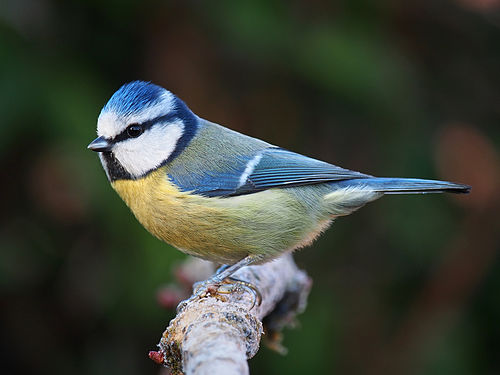
Blue Tit
Cyanistes caeruleus

Great Tit
Parus major

Common Chiffchaff
Phylloscopus collybita

European Serin
Serinus serinus
Global Distribution
Where this species is recorded worldwide. Restricted to human observations from 2019 onwards — the same kind of record and the same period the probabilities on this page are built from, so collar-tracking studies, camera-trap arrays and museum specimens are excluded. Around Santa Rosa that removes 5,924 GPS fixes from a handful of tagged jaguars.
where this species is recorded (GBIF density — it tracks where observers go, not how likely a sighting is) · parks where it occurs — tap a pin for the sighting probability there
Parks Where Found
Quick answers
What are the chances of seeing a Whitethroat in Ecrins National Park?
Under 5% of wildlife watchers report a Whitethroat sighting in Ecrins National Park, based on 9 verified sightings from GBIF citizen-science data.
When is the best time to see Whitethroat in Ecrins National Park?
June has the highest sighting rate for Whitethroat in Ecrins National Park in our monthly data.