


Garden Warbler
Sylvia borin
- KingdomAnimalia (Animals)
- PhylumChordata (Chordates)
- ClassAves (Birds)
- OrderPasseriformes (Perching Birds)
- FamilySylviidae (Sylviid Warblers and Allies)
- GenusSylvia (Sylvia Warblers)
- SpeciesSylvia borin (Garden Warbler)
About the Garden Warbler
The garden warbler (Sylvia borin) is a common and widespread small bird that breeds in most of Europe and in the Palearctic to western Siberia. It is a plain, long-winged and long-tailed warbler with brown upperparts and dull white underparts; the sexes are similar and juveniles resemble the adults. Its two subspecies differ only slightly and interbreed where their ranges overlap. Due to its lack of distinguishing features, this species can be confused with a number of other unstreaked warblers. The garden warbler's rich melodic song is similar to that of the blackcap, its closest relative, which competes with it for territory when nesting in the same woodland.
The preferred breeding habitat in Eurasia is open woodland with dense low cover for nesting; despite its name, gardens are rarely occupied by this small passerine bird. The clutch of four or five blotched cream or white eggs is laid in a robust cup-shaped nest built near the ground and concealed by dense vegetation. The eggs are incubated for 11–12 days. The chicks are altricial, hatching naked and with closed eyes, and are fed by both parents. They fledge about 10 days after hatching. Only about a quarter of young birds survive their first year. The garden warbler is strongly migratory, wintering in sub-Saharan Africa. A wide range of habitats are used in Africa, but closed forest and treeless Sahel are both shunned. Insects are the main food in the breeding season, although fruit predominates when birds are fattening prior to migration, figs being a particular favourite where available. These warblers have a mixed diet of insects and fruit in their African wintering grounds.
The garden warbler is hunted by Eurasian sparrowhawks and domestic cats, and its eggs and nestlings are taken by a variety of mammalian and avian predators. It may be host to various fleas, mites and internal parasites, and it is a host of the common cuckoo, a brood parasite. The large and fairly stable numbers and huge range of the garden warbler mean that it is classed as least concern by the International Union for Conservation of Nature. Despite a small population decline in much of its European range, the bird's breeding distribution is expanding northwards in Scandinavia. Wikipedia →
Closest Relatives at Ecrins National Park

Blackcap
Sylvia atricapilla

Lesser Whitethroat
Sylvia curruca

Whitethroat
Sylvia communis

Chaffinch
Fringilla coelebs

Coal Tit
Periparus ater

Eurasian Blackbird
Turdus merula

Eurasian Goldfinch
Carduelis carduelis

European Robin
Erithacus rubecula
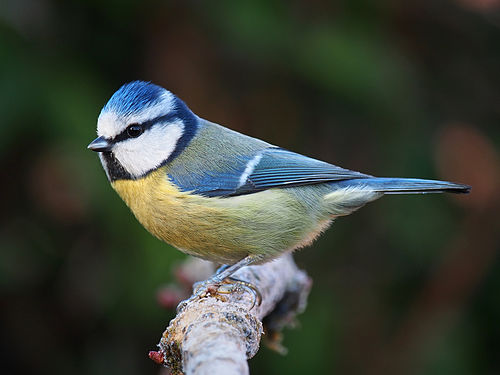
Blue Tit
Cyanistes caeruleus

Great Tit
Parus major

Common Chiffchaff
Phylloscopus collybita

European Serin
Serinus serinus
Global Distribution
Where this species is recorded worldwide. Restricted to human observations from 2019 onwards — the same kind of record and the same period the probabilities on this page are built from, so collar-tracking studies, camera-trap arrays and museum specimens are excluded. Around Santa Rosa that removes 5,924 GPS fixes from a handful of tagged jaguars.
where this species is recorded (GBIF density — it tracks where observers go, not how likely a sighting is) · parks where it occurs — tap a pin for the sighting probability there
Parks Where Found
Quick answers
What are the chances of seeing a Garden Warbler in Ecrins National Park?
About 10% of wildlife watchers report a Garden Warbler sighting in Ecrins National Park, based on 19 verified sightings from GBIF citizen-science data.
When is the best time to see Garden Warbler in Ecrins National Park?
June has the highest sighting rate for Garden Warbler in Ecrins National Park in our monthly data.