


Red-necked Phalarope
Phalaropus lobatus
- KingdomAnimalia (Animals)
- PhylumChordata (Chordates)
- ClassAves (Birds)
- OrderCharadriiformes (Shorebirds and Allies)
- FamilyScolopacidae (Sandpipers and Allies)
- GenusPhalaropus (Phalaropes)
- SpeciesPhalaropus lobatus (Red-necked Phalarope)
About the Red-necked Phalarope
The red-necked phalarope (Phalaropus lobatus), also known as the northern phalarope and hyperborean phalarope, is a small wader. This phalarope breeds in the Arctic regions of North America and Eurasia. It is migratory, and, unusually for a wader, winters at sea on tropical oceans.
In 1743, the English naturalist George Edwards included an illustration and a description of the red-necked phalarope in the first volume of his A Natural History of Uncommon Birds. He used the English name "The coot-footed tringa". Edwards based his hand-coloured etching on a specimen that had been collected off the coast of Maryland. When in 1758, the Swedish naturalist Carl Linnaeus updated his Systema Naturae for the tenth edition, he placed the red-necked phalarope with the phalaropes and sandpipers in the genus Tringa. Linnaeus included a brief description, coined the binomial name Tringa lobata and cited Edwards' work. The red-necked phalarope is now placed in the genus Phalaropus that was introduced by the French zoologist Mathurin Jacques Brisson in 1760. The English and genus names come through French phalarope and scientific Latin Phalaropus from Ancient Greek phalaris, "coot",... Wikipedia →
Closest Relatives at Raja Ampat
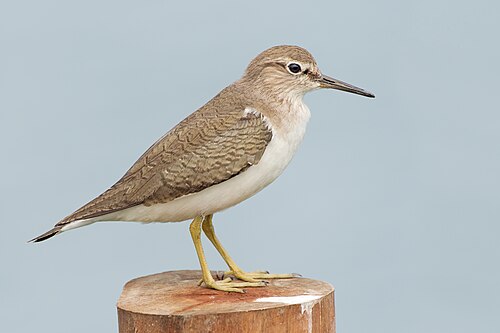
Common Sandpiper
Actitis hypoleucos

Whimbrel
Numenius phaeopus

Grey-tailed Tattler
Tringa brevipes

Great Knot
Calidris tenuirostris

Curlew Sandpiper
Calidris ferruginea

Little Stint
Calidris minuta

Common Greenshank
Tringa nebularia

Bar-tailed Godwit
Limosa lapponica

Wood Sandpiper
Tringa glareola

Sharp-tailed Sandpiper
Calidris acuminata

Ruddy Turnstone
Arenaria interpres

Terek Sandpiper
Xenus cinereus
Global Distribution
Where this species is recorded worldwide. Restricted to human observations from 2019 onwards — the same kind of record and the same period the probabilities on this page are built from, so collar-tracking studies, camera-trap arrays and museum specimens are excluded. Around Santa Rosa that removes 5,924 GPS fixes from a handful of tagged jaguars.
where this species is recorded (GBIF density — it tracks where observers go, not how likely a sighting is) · parks where it occurs — tap a pin for the sighting probability there
Parks Where Found
Quick answers
What are the chances of seeing a Red-necked Phalarope in Raja Ampat?
About 10% of wildlife watchers report a Red-necked Phalarope sighting in Raja Ampat, based on 173 verified sightings from GBIF citizen-science data.
When is the best time to see Red-necked Phalarope in Raja Ampat?
November has the highest sighting rate for Red-necked Phalarope in Raja Ampat in our monthly data.