



Western Yellow Wagtail
Motacilla flava
Silhouette: Martin Bulla, based on Ren Hathway's illustration · PhyloPic
- KingdomAnimalia (Animals)
- PhylumChordata (Chordates)
- ClassAves (Birds)
- OrderPasseriformes (Perching Birds)
- FamilyMotacillidae (Wagtails and Pipits)
- GenusMotacilla (Wagtails)
- SpeciesMotacilla flava (Western Yellow Wagtail)
About the Western Yellow Wagtail
The western yellow wagtail (Motacilla flava) is a small passerine bird in the wagtail family Motacillidae, which also includes the pipits and longclaws. This species breeds in much of temperate Europe and Asia. Most populations are migratory, moving south to tropical Africa and southern Asia for the winter; the small population breeding in Egypt is however resident there.
It is a slender 15–16 cm long bird, with the characteristic long, constantly wagging tail of its genus. It is the shortest tailed of the European wagtails. The breeding adult male is basically olive above and yellow below. In other plumages, particularly in juveniles, the yellow may be diluted to whitish. The heads of breeding males come in a variety of colours and patterns depending on subspecies. The call is a high-pitched jeet. This insectivorous bird inhabits open country near water, such as wet meadows. It nests in tussocks, laying 4–8 speckled eggs.
The western yellow wagtail was formally described in 1758 by the Swedish naturalist Carl Linnaeus in the tenth edition of his Systema Naturae under its current binomial name Motacilla flava. In 1555 the Swiss naturalist Conrad Gessner had used the identical... Wikipedia →
Recent sightings of Western Yellow Wagtail in Ranthambore National Park
LIVEiNaturalistClosest Relatives at Ranthambore National Park

 Grey Wagtail
Motacilla cinerea

White-browed Wagtail
Motacilla maderaspatensis

White Wagtail
Motacilla alba

Citrine Wagtail
Motacilla citreola

 Tawny Pipit
Anthus campestris

 Tree Pipit
Anthus trivialis
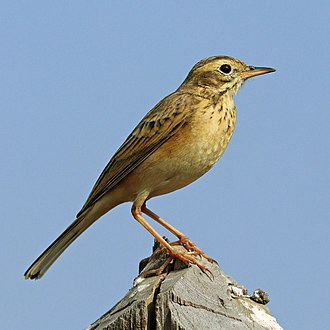
 Oriental Pipit
Anthus rufulus

Olive-backed Pipit
Anthus hodgsoni

Long-billed Pipit
Anthus similis

 Rufous Treepie
Dendrocitta vagabunda

 Jungle Babbler
Turdoides striata

 Indian Robin
Saxicoloides fulicatus
Global Distribution
Warmer areas are where this animal is recorded most often.
Parks Where Found
Quick answers
What are the chances of seeing a Western Yellow Wagtail in Ranthambore National Park?
Under 5% of wildlife watchers report a Western Yellow Wagtail sighting in Ranthambore National Park, based on 45 verified sightings from GBIF citizen-science data.
When is the best time to see Western Yellow Wagtail in Ranthambore National Park?
March has the highest sighting rate for Western Yellow Wagtail in Ranthambore National Park in our monthly data.