


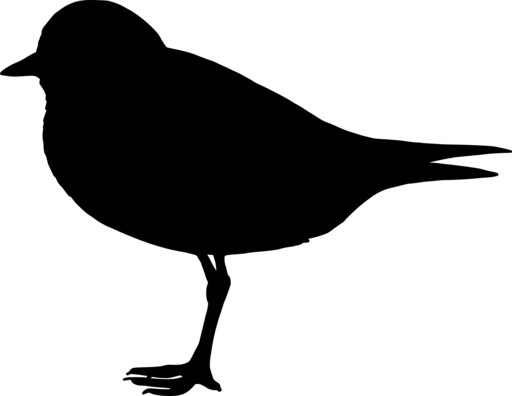
Semipalmated Plover
Charadrius semipalmatus
Silhouette: Andy Wilson · PhyloPic
- KingdomAnimalia (Animals)
- PhylumChordata (Chordates)
- ClassAves (Birds)
- OrderCharadriiformes (Shorebirds and Allies)
- FamilyCharadriidae (Plovers and Lapwings)
- GenusCharadrius (Holarctic Ringed Plovers and Allies)
- SpeciesCharadrius semipalmatus (Semipalmated Plover)
About the Semipalmated Plover
The semipalmated plover (Charadrius semipalmatus) is a small plover. Charadrius is a Late Latin word for a yellowish bird mentioned in the fourth-century Vulgate. It derives from Ancient Greek kharadrios a bird found in ravines and river valleys (kharadra, "ravine"). The specific semipalmatus is Latin and comes from semi, "half" and palma, "palm". Like the English name, this refers to its only partially webbed feet.
This species weighs a mean 47.4 g (1.7 oz.) for males and 46.1 g (1.6 oz.) for females, with body masses ranging from 37.6-54.7 g (1.3-1.9 oz.). and measures 17–19 cm (6.7–7.5 in) in length with a 12–13 cm (4.7–5.1 in) mean wing length. Adults have a grey-brown back and wings, a white belly, and a white breast with one black neckband. They have a brown cap, a white forehead, a black mask around the eyes and a short orange and black bill.
Their breeding habitat is open ground on beaches or flats across northern Canada and Alaska. They nest on the ground in an open area with little or no plant growth. They are migratory and winter in coastal areas of the southern United States, the Caribbean and much of South America. They are extremely rare... Wikipedia →
Recent sightings of Semipalmated Plover in Elk Island National Park
LIVEiNaturalistClosest Relatives at Elk Island National Park

 Killdeer
Charadrius vociferus

 Franklin's Gull
Leucophaeus pipixcan

 Ring-billed Gull
Larus delawarensis

 Wilson's Snipe
Gallinago delicata

 Black Tern
Chlidonias niger

 Bonaparte's Gull
Chroicocephalus philadelphia

 Spotted Sandpiper
Actitis macularius

 Forster's Tern
Sterna forsteri

 Greater Yellowlegs
Tringa melanoleuca

 Solitary Sandpiper
Tringa solitaria

Lesser Yellowlegs
Tringa flavipes

 American Avocet
Recurvirostra americana
Global Distribution
Warmer areas are where this animal is recorded most often.