



House Martin
Delichon urbicum
Silhouette: Andy Wilson · PhyloPic
- KingdomAnimalia (Animals)
- PhylumChordata (Chordates)
- ClassAves (Birds)
- OrderPasseriformes (Perching Birds)
- FamilyHirundinidae (Swallows and Martins)
- GenusDelichon (House Martins)
- SpeciesDelichon urbicum (House Martin)
About the House Martin
The western house martin (Delichon urbicum), sometimes called the common house martin, northern house martin or, particularly in Europe, just house martin, is a migratory passerine bird of the swallow family which breeds in Europe, north Africa and west-central Asia; and winters in sub-Saharan Africa and southwestern Asia. It feeds on insects which are caught in flight, and it migrates to climates where flying insects are plentiful. It has a blue head and upperparts, white rump and pure white underparts, and is found in both open country and near human habitation. It is similar in appearance to the two other martin species of the genus Delichon, which are both endemic to eastern and southern Asia. It has two accepted subspecies.
Both the scientific and colloquial name of the bird are related to its use of human-made structures. It builds a closed cup nest from mud pellets under eaves or similar locations on buildings usually in colonies. It is hunted by the Eurasian hobby (Falco subbuteo), and like other birds is affected by internal parasites and external fleas and mites. Its large range and population mean that it is not threatened globally.
The western house martin... Wikipedia →
Recent sightings of House Martin in Queen Elizabeth National Park
LIVEiNaturalistClosest Relatives at Queen Elizabeth National Park

 Barn Swallow
Hirundo rustica
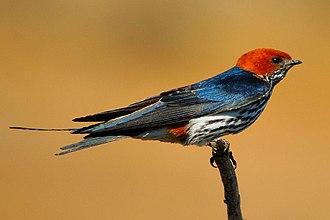
 Lesser Striped-Swallow
Cecropis abyssinica

Wire-tailed Swallow
Hirundo smithii

 White-headed Sawwing
Psalidoprocne albiceps

Angola Swallow
Hirundo angolensis

 Bank Swallow
Riparia riparia

Mosque Swallow
Cecropis senegalensis

Black Sawwing
Psalidoprocne pristoptera

 Banded Martin
Riparia cincta

Rufous-chested Swallow
Cecropis semirufa

Plain Martin
Riparia paludicola

Rock Martin
Ptyonoprogne fuligula
Global Distribution
Warmer areas are where this animal is recorded most often.
Parks Where Found
Quick answers
What are the chances of seeing a House Martin in Queen Elizabeth National Park?
Under 5% of wildlife watchers report a House Martin sighting in Queen Elizabeth National Park, based on 10 verified sightings from GBIF citizen-science data.
When is the best time to see House Martin in Queen Elizabeth National Park?
February has the highest sighting rate for House Martin in Queen Elizabeth National Park in our monthly data.