


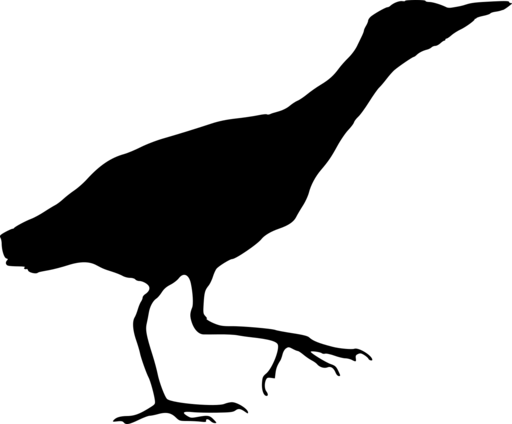
Purple Heron
Ardea purpurea
Silhouette: Giles Laurent · PhyloPic
- KingdomAnimalia (Animals)
- PhylumChordata (Chordates)
- ClassAves (Birds)
- OrderPelecaniformes (Pelicans, Herons, Ibises, and Allies)
- FamilyArdeidae (Herons, Egrets, and Bitterns)
- GenusArdea (Great Herons and Egrets)
- SpeciesArdea purpurea (Purple Heron)
About the Purple Heron
The purple heron (Ardea purpurea) is a wide-ranging heron species. It breeds in Africa, central and southern Europe, and southern and eastern Palearctic. The Western Palearctic populations migrate between breeding and wintering habitats whereas the African and tropical-Asian populations are primarily sedentary, except for occasional dispersive movements.
It is similar in appearance to the more common grey heron but is slightly smaller, more slender and has darker plumage. It is also a more evasive bird, favouring densely vegetated habitats near water, particularly reed beds. It hunts for a range of prey including fish, rodents, frogs and insects, either stalking them or standing waiting in ambush.
Purple herons are colonial breeders and build a bulky nest out of dead reeds or sticks close to the water' edge among reeds or in dense vegetation. About five bluish-green eggs are laid and are incubated by both birds. The young hatch about four weeks later and fledge six weeks after that. The International Union for Conservation of Nature notes that the global population trend is downwards, largely because of the drainage of wetlands, but assesses the purple heron's conservation status as being of "least concern". Wikipedia →
Recent sightings of Purple Heron in Lake Nakuru National Park
LIVEiNaturalistClosest Relatives at Lake Nakuru National Park

 Grey Heron
Ardea cinerea

 Great Egret
Ardea alba

 Black-headed Heron
Ardea melanocephala

 Goliath Heron
Ardea goliath

 Little Egret
Egretta garzetta

Cattle Egret
Bubulcus ibis

intermediate egret
Egretta intermedia

 Squacco Heron
Ardeola ralloides

 Striated Heron
Butorides striata

 Black-crowned Night Heron
Nycticorax nycticorax

Black Heron
Egretta ardesiaca

Western Reef Egret
Egretta gularis
Global Distribution
Warmer areas are where this animal is recorded most often.
Parks Where Found
Quick answers
What are the chances of seeing a Purple Heron in Lake Nakuru National Park?
Under 5% of wildlife watchers report a Purple Heron sighting in Lake Nakuru National Park, based on 32 verified sightings from GBIF citizen-science data.
When is the best time to see Purple Heron in Lake Nakuru National Park?
June has the highest sighting rate for Purple Heron in Lake Nakuru National Park in our monthly data.