


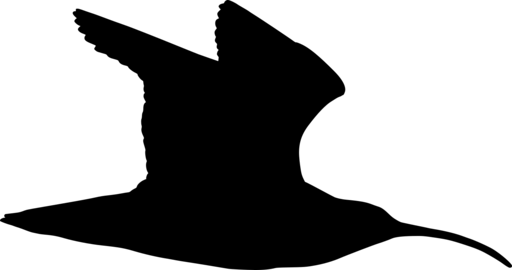
Whimbrel
Numenius phaeopus
Silhouette: Andy Wilson · PhyloPic
- KingdomAnimalia (Animals)
- PhylumChordata (Chordates)
- ClassAves (Birds)
- OrderCharadriiformes (Shorebirds and Allies)
- FamilyScolopacidae (Sandpipers and Allies)
- GenusNumenius (Curlews)
- SpeciesNumenius phaeopus (Whimbrel)
About the Whimbrel
The Eurasian whimbrel (Numenius phaeopus), historically known as the white-rumped whimbrel in North America, is a wader in the large family Scolopacidae. It is one of the most widespread of the curlews, breeding across much of subarctic Palearctic region and Europe as far south as Scotland. This species and the Hudsonian whimbrel were split in 2019, although some taxonomic authorities still consider them to be conspecific.
The Eurasian whimbrel was formally described by Carl Linnaeus in 1758 in the tenth edition of his Systema Naturae under the binomial name Scolopax phaeopus. It is now placed with the curlews in the genus Numenius that was introduced by Mathurin Jacques Brisson in 1760.
The genus name Numenius is from Ancient Greek noumenios, a bird mentioned by Hesychius. It is associated with the curlews because it appears to be derived from neos, "new" and mene, "moon", referring to the crescent-shaped bill. The specific epithet phaeopus is the Medieval Latin name for the bird, from Ancient Greek phaios, "dusky" and pous, "foot". The English name "whimbrel" is imitative of the bird's call.
Five subspecies are recognised: N. p. phaeopus (Linnaeus, 1758) – nominate... Wikipedia →
Recent sightings of Whimbrel in Sierra Nevada National Park
LIVEiNaturalistClosest Relatives at Sierra Nevada National Park

 Common Snipe
Gallinago gallinago

 Common Sandpiper
Actitis hypoleucos

 Green Sandpiper
Tringa ochropus

 Jack Snipe
Lymnocryptes minimus

Wood Sandpiper
Tringa glareola

Common Redshank
Tringa totanus

 Lesser Black-backed Gull
Larus fuscus

 Black-winged Stilt
Himantopus himantopus

 Eurasian Stone-curlew
Burhinus oedicnemus

 Common Ringed Plover
Charadrius hiaticula

 Black-headed Gull
Chroicocephalus ridibundus

Yellow-legged Gull
Larus michahellis
Global Distribution
Warmer areas are where this animal is recorded most often.