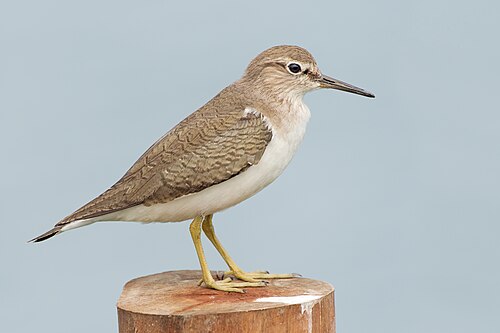



Common Sandpiper
Actitis hypoleucos
Silhouette: Rebecca Groom · PhyloPic
- KingdomAnimalia (Animals)
- PhylumChordata (Chordates)
- ClassAves (Birds)
- OrderCharadriiformes (Shorebirds and Allies)
- FamilyScolopacidae (Sandpipers and Allies)
- GenusActitis (Common and Spotted Sandpipers)
- SpeciesActitis hypoleucos (Common Sandpiper)
About the Common Sandpiper
The common sandpiper (Actitis hypoleucos) is a small Palearctic wader. This bird and its American sister species, the spotted sandpiper (A. macularia), make up the genus Actitis. They are parapatric and replace each other geographically; stray birds of either species may settle down with breeders of the other and hybridize. Hybridization has also been reported between the common sandpiper and the green sandpiper, a member of the closely related genus Tringa.
The common sandpiper was formally described by the Swedish naturalist Carl Linnaeus in 1758 in the tenth edition of his Systema Naturae under the binomial name Tringa hypoleucos. The species is now placed together with the spotted sandpiper in the genus Actitis that was introduced in 1811 by the German zoologist Johann Karl Wilhelm Illiger. The genus name Actitis is from Ancient Greek aktites meaning "coast-dweller" from akte meaning "coast". The specific epithet hypoleucos combines the Ancient Greek hupo meaning "beneath" with leukos meaning "white". The species is monotypic and no subspecies are recognised.
The adult is 18–20 cm (7.1–7.9 in) long with a 32–35 cm (13–14 in) wingspan. It has greyish... Wikipedia →
Recent sightings of Common Sandpiper in Sierra Nevada National Park
LIVEiNaturalistClosest Relatives at Sierra Nevada National Park

 Common Snipe
Gallinago gallinago

 Green Sandpiper
Tringa ochropus

 Jack Snipe
Lymnocryptes minimus

Wood Sandpiper
Tringa glareola

Common Redshank
Tringa totanus

 Whimbrel
Numenius phaeopus

 Lesser Black-backed Gull
Larus fuscus

 Black-winged Stilt
Himantopus himantopus

 Eurasian Stone-curlew
Burhinus oedicnemus

 Common Ringed Plover
Charadrius hiaticula

 Black-headed Gull
Chroicocephalus ridibundus

Yellow-legged Gull
Larus michahellis
Global Distribution
Warmer areas are where this animal is recorded most often.
Parks Where Found
Quick answers
What are the chances of seeing a Common Sandpiper in Sierra Nevada National Park?
Under 5% of wildlife watchers report a Common Sandpiper sighting in Sierra Nevada National Park, based on 38 verified sightings from GBIF citizen-science data.
When is the best time to see Common Sandpiper in Sierra Nevada National Park?
April has the highest sighting rate for Common Sandpiper in Sierra Nevada National Park in our monthly data.