


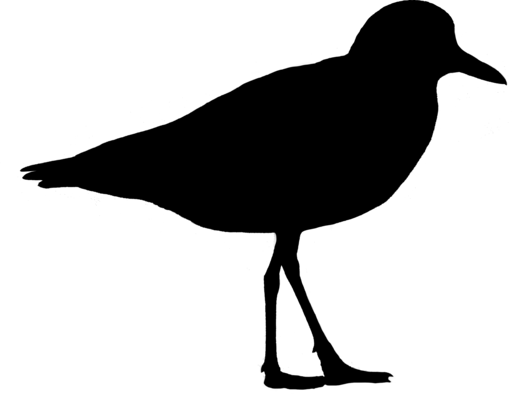
Black-bellied Plover
Pluvialis squatarola
Silhouette: Emily Willoughby · PhyloPic
- KingdomAnimalia (Animals)
- PhylumChordata (Chordates)
- ClassAves (Birds)
- OrderCharadriiformes (Shorebirds and Allies)
- FamilyCharadriidae (Plovers and Lapwings)
- GenusPluvialis (Golden Plovers and Grey Plover)
- SpeciesPluvialis squatarola (Black-bellied Plover)
About the Black-bellied Plover
The grey plover or black-bellied plover (Pluvialis squatarola) is a large plover breeding in Arctic regions. It is a long-distance migrant, with a nearly worldwide coastal distribution when not breeding. The grey plover was formally described by the Swedish naturalist Carl Linnaeus in 1758 in the tenth edition of his Systema Naturae under the binomial name Tringa squatarola. It is now placed with three other plovers in the genus Pluvialis that was introduced by the French ornithologist Mathurin Jacques Brisson in 1760. The genus name is Latin and means relating to rain, from pluvia, "rain". It was believed that they flocked when rain was imminent. The species name squatarola is a Latinised version of Sgatarola, a Venetian name for some kind of plover.
The English common name used for this species differs in different parts of the world. It is generally known as "grey plover" in the Old World and "black-bellied plover" in the New World. Three subspecies are recognised:
P. s. squatarola (Linnaeus, 1758) – breeds in north Eurasia and Alaska; non-breeding in west, south Europe, Africa, south, east Asia and Australasia and west Americas P. s. tomkovichi Engelmoer & Roselaar... Wikipedia →
Recent sightings of Black-bellied Plover in Great Otway National Park
LIVEiNaturalistClosest Relatives at Great Otway National Park

 Pacific Golden-Plover
Pluvialis fulva

 Masked Lapwing
Vanellus miles

 Hooded Plover
Thinornis cucullatus

Banded Lapwing
Vanellus tricolor

 Red-kneed Dotterel
Erythrogonys cinctus

 Silver Gull
Chroicocephalus novaehollandiae

 Crested Tern
Thalasseus bergii

 Pacific Gull
Larus pacificus

 Sooty Oystercatcher
Haematopus fuliginosus

 Latham's Snipe
Gallinago hardwickii

 Whiskered Tern
Chlidonias hybrida

 Caspian Tern
Hydroprogne caspia
Global Distribution
Warmer areas are where this animal is recorded most often.