



Common Hoopoe
Upupa epops
Silhouette: Ferran Sayol · PhyloPic
- KingdomAnimalia (Animals)
- PhylumChordata (Chordates)
- ClassAves (Birds)
- OrderBucerotiformes (Hornbills and Hoopoes)
- FamilyUpupidae (Hoopoes)
- GenusUpupa (Hoopoes)
- SpeciesUpupa epops (Common Hoopoe)
About the Common Hoopoe
The Eurasian hoopoe or common hoopoe (Upupa epops) is the most widespread species of hoopoe. It is a distinctive cinnamon coloured bird with black and white wings, a tall erectile crest, a broad white band across a black tail, and a long narrow downcurved bill. Its call is a soft "oop-oop-oop".
The Eurasian hoopoe is native to Europe, Asia and Africa. It is migratory in the northern part of its range. Some ornithologists consider the Madagascar hoopoe (U. marginata) as a subspecies. The African hoopoe, subspecies U. e. africana, has sometimes been treated as a separate species.
The Eurasian hoopoe was formally described in 1758 by the Swedish naturalist Carl Linnaeus in the tenth edition of his Systema Naturae. He cited the earlier descriptions by the French naturalist Pierre Belon and by the Swiss naturalist Conrad Gessner, both of which had been published in 1555. Linnaeus placed the Eurasian hoopoe with the northern bald ibis and the red-billed chough in the genus Upupa and coined the binomial name Upupa epops. The specific epithet epops in the Ancient Greek word for a hoopoe.
Eight subspecies are recognised. The subspecies vary in size and the depth... Wikipedia →
Recent sightings of Common Hoopoe in Lake Mburo National Park
LIVEiNaturalistClosest Relatives at Lake Mburo National Park

 African Grey Hornbill
Lophoceros nasutus

 Green Wood Hoopoe
Phoeniculus purpureus

 Common Scimitarbill
Rhinopomastus cyanomelas

Crowned Hornbill
Lophoceros alboterminatus

Black Scimitarbill
Rhinopomastus aterrimus

Black-and-white-casqued Hornbill
Bycanistes subcylindricus

African Pied Hornbill
Lophoceros fasciatus
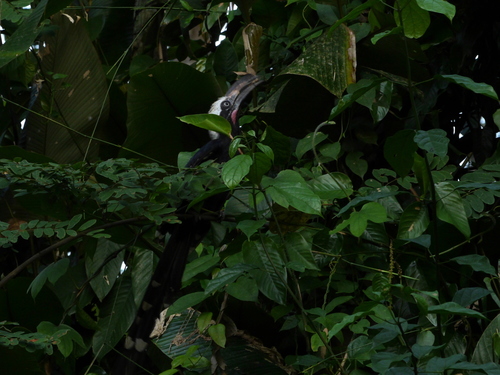
White-crested Hornbill
Horizocerus albocristatus
Global Distribution
Warmer areas are where this animal is recorded most often.
Parks Where Found
Quick answers
What are the chances of seeing a Common Hoopoe in Lake Mburo National Park?
Under 5% of wildlife watchers report a Common Hoopoe sighting in Lake Mburo National Park, based on 53 verified sightings from GBIF citizen-science data.
When is the best time to see Common Hoopoe in Lake Mburo National Park?
October has the highest sighting rate for Common Hoopoe in Lake Mburo National Park in our monthly data.