


Black-bellied Plover
Pluvialis squatarola
- KingdomAnimalia (Animals)
- PhylumChordata (Chordates)
- ClassAves (Birds)
- OrderCharadriiformes (Shorebirds and Allies)
- FamilyCharadriidae (Plovers and Lapwings)
- GenusPluvialis (Golden Plovers and Grey Plover)
- SpeciesPluvialis squatarola (Black-bellied Plover)
About the Black-bellied Plover
The grey plover or black-bellied plover (Pluvialis squatarola) is a large plover breeding in Arctic regions. It is a long-distance migrant, with a nearly worldwide coastal distribution when not breeding. The grey plover was formally described by the Swedish naturalist Carl Linnaeus in 1758 in the tenth edition of his Systema Naturae under the binomial name Tringa squatarola. It is now placed with three other plovers in the genus Pluvialis that was introduced by the French ornithologist Mathurin Jacques Brisson in 1760. The genus name is Latin and means relating to rain, from pluvia, "rain". It was believed that they flocked when rain was imminent. The species name squatarola is a Latinised version of Sgatarola, a Venetian name for some kind of plover.
The English common name used for this species differs in different parts of the world. It is generally known as "grey plover" in the Old World and "black-bellied plover" in the New World. Three subspecies are recognised:
P. s. squatarola (Linnaeus, 1758) – breeds in north Eurasia and Alaska; non-breeding in west, south Europe, Africa, south, east Asia and Australasia and west Americas P. s. tomkovichi Engelmoer & Roselaar... Wikipedia →
Closest Relatives at Raja Ampat

Pacific Golden-Plover
Pluvialis fulva

Greater Sandplover
Charadrius leschenaultii

Eastern Sand Plover
Charadrius veredus
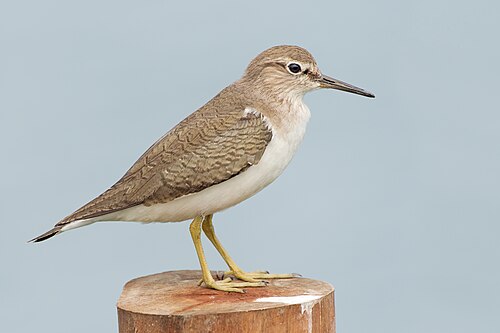
Common Sandpiper
Actitis hypoleucos

Crested Tern
Thalasseus bergii

Whimbrel
Numenius phaeopus

Common Tern
Sterna hirundo

Bridled Tern
Onychoprion anaethetus

Red-necked Phalarope
Phalaropus lobatus

Black-naped Tern
Sterna sumatrana

Grey-tailed Tattler
Tringa brevipes

Great Knot
Calidris tenuirostris
Global Distribution
Where this species is recorded worldwide. Restricted to human observations from 2019 onwards — the same kind of record and the same period the probabilities on this page are built from, so collar-tracking studies, camera-trap arrays and museum specimens are excluded. Around Santa Rosa that removes 5,924 GPS fixes from a handful of tagged jaguars.
where this species is recorded (GBIF density — it tracks where observers go, not how likely a sighting is) · parks where it occurs — tap a pin for the sighting probability there