


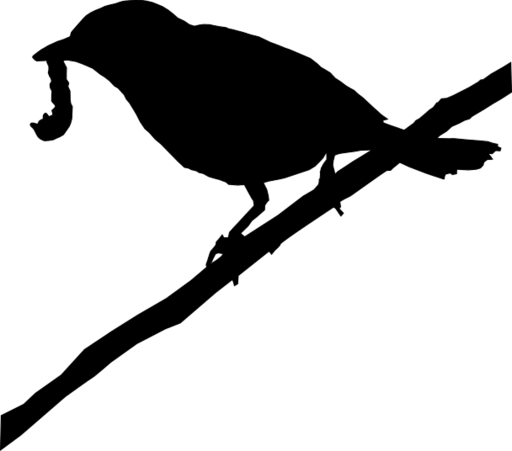
American Redstart
Setophaga ruticilla
Silhouette: Dylan GE Gomes · PhyloPic
- KingdomAnimalia (Animals)
- PhylumChordata (Chordates)
- ClassAves (Birds)
- OrderPasseriformes (Perching Birds)
- FamilyParulidae (New World Warblers)
- GenusSetophaga (Setophaga Warblers)
- SpeciesSetophaga ruticilla (American Redstart)
About the American Redstart
The American redstart (Setophaga ruticilla) is a New World warbler. It is only distantly related to the Old World (common) redstart, with both belonging to the order Passeriformes. The American redstart was described by Carl Linnaeus in 1758 in the 10th edition of his Systema Naturae under the binomial name Motacilla ruticilla.
The genus name Setophaga is from Ancient Greek σής : sēs (genitive σητός : sētós) "moth", and φάγος : phágos "eater". The specific ruticilla is Neo-Latin for "redstart" from Latin rutilus, "red", and the diminutive -cilla.
In Ancient Greek the name was φοινίκουρος : phoiníkouros (from φοῖνιξ : phoĩnix- "red" and οὐρά : ourá "tail") "Redstart" refers to the male's red tail, "start" being an old word for tail. The American redstart is a smallish warbler. It measures 11 to 14 cm (4.3 to 5.5 in) in total length and has a wingspan of 16 to 23 cm (6.3 to 9.1 in). Its length is boosted by a relatively long tail and it is one of the lightest birds in its family. Weight is considerably less in winter than in summer. Males weigh an average of 8.6 g (0.30 oz) in summer but drop to 7.2 g (0.25 oz) in winter, while females drop even... Wikipedia →
Closest Relatives at San Lorenzo Protected Forest

 Chestnut-sided Warbler
Setophaga pensylvanica

Bay-breasted Warbler
Setophaga castanea

Yellow Warbler
Setophaga petechia

 Blackpoll Warbler
Setophaga striata

 Northern Waterthrush
Parkesia noveboracensis

 Tennessee Warbler
Leiothlypis peregrina

Rufous-capped Warbler
Basileuterus rufifrons

Prothonotary Warbler
Protonotaria citrea

Mourning Warbler
Geothlypis philadelphia

Canada Warbler
Cardellina canadensis

Kentucky Warbler
Geothlypis formosa

 Black-and-white Warbler
Mniotilta varia
Global Distribution
Warmer areas are where this animal is recorded most often.