


Common House Gecko
Hemidactylus frenatus
Silhouette: Andy Wilson · PhyloPic
- KingdomAnimalia (Animals)
- PhylumChordata (Chordates)
- ClassSquamata
- FamilyGekkonidae (Typical Geckos)
- GenusHemidactylus (House Geckos)
- SpeciesHemidactylus frenatus (Common House Gecko)
About the Common House Gecko
The Common house gecko (Hemidactylus frenatus) is a gecko native to South and Southeast Asia and Near Oceania. It is also known as the Asian house gecko, Pacific house gecko, wall gecko, House lizard, Tiktiki, chipkali and moon lizard.
The common house gecko is nocturnal, hiding during the day and foraging for insects at night. They can be seen climbing walls of houses and other buildings in search of insects attracted to porch lights, and are immediately recognisable by their characteristic chirping.
They grow to a length of between 7.5–15 cm (3–6 in), and live for about 7 years. They are non-venomous and not harmful to humans. Most medium-sized to large geckos are docile, but may bite if distressed, which might pierce skin. The common house gecko is a tropical species, and thrives in warm, humid areas where it can crawl around on rotting wood in search of the insects it eats, as well as within urban landscapes in warm climates. The animal is very adaptable and may prey on insects and spiders, displacing other gecko species which are less robust or behaviourally aggressive. In parts of Australia and Papua New Guinea they are often confused with a similar native lizard, the dubious dtella. Wikipedia →
Recent sightings of Common House Gecko in Sinharaja Forest Reserve
LIVEiNaturalistClosest Relatives at Sinharaja Forest Reserve

 Spotted House Gecko
Hemidactylus parvimaculatus

Kandyan Gecko
Hemidactylus depressus

 Mutilating Gecko
Gehyra mutilata
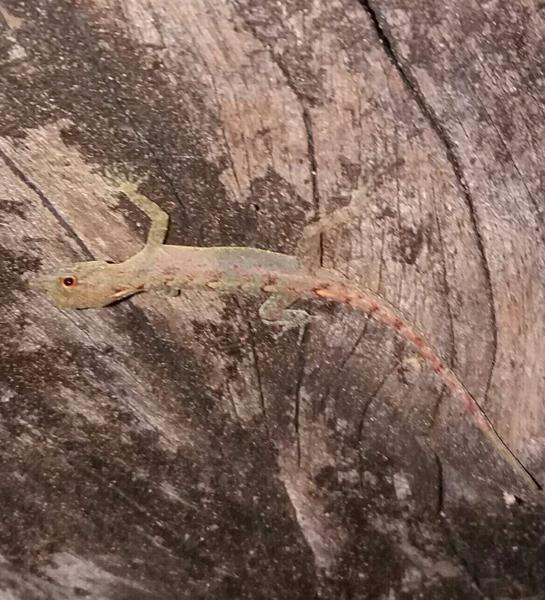
 Galle Round-eyed Gecko
Cnemaspis silvula

 Dark-collared Bent-toed Gecko
Cyrtodactylus cracens
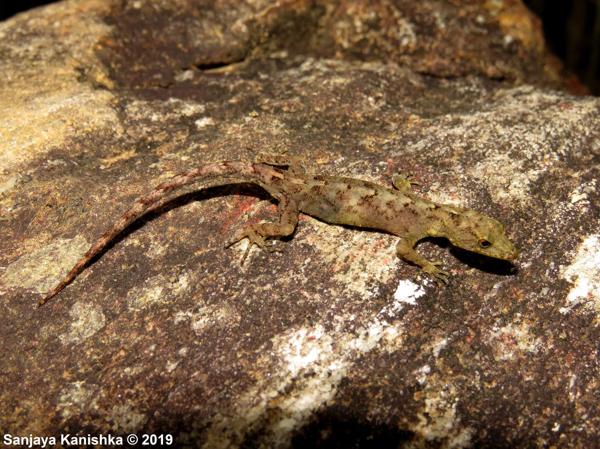
Rakwana Round-eyed Gecko
Cnemaspis pulchra

 Common Dwarf Gecko
Hemiphyllodactylus typus

 Mourning Gecko
Lepidodactylus lugubris

Molligoda's Day Gecko
Cnemaspis molligodai
Global Distribution
Warmer areas are where this animal is recorded most often.
Parks Where Found
Quick answers
What are the chances of seeing a Common House Gecko in Sinharaja Forest Reserve?
About 20% of wildlife watchers report a Common House Gecko sighting in Sinharaja Forest Reserve, based on 10 verified sightings from GBIF citizen-science data.
When is the best time to see Common House Gecko in Sinharaja Forest Reserve?
January has the highest sighting rate for Common House Gecko in Sinharaja Forest Reserve in our monthly data.