



Black Vulture
Coragyps atratus
Silhouette: Andy Wilson · PhyloPic
- KingdomAnimalia (Animals)
- PhylumChordata (Chordates)
- ClassAves (Birds)
- OrderAccipitriformes (Hawks, Eagles, Kites, and Allies)
- FamilyCathartidae (New World Vultures)
- GenusCoragyps
- SpeciesCoragyps atratus (Black Vulture)
About the Black Vulture
The black vulture (Coragyps atratus), also known as the American black vulture, Mexican vulture, zopilote, urubu, or gallinazo, is a bird in the New World vulture family whose range extends from the northeastern United States to Peru, Central Chile and Uruguay in South America, and common throughout Brazil where it can be seen in large scavenging groups. Although a common and widespread species, it has a somewhat more restricted distribution than its compatriot, the turkey vulture, which breeds well into Canada and all the way south to Tierra del Fuego. It is the only extant member of the genus Coragyps, which is in the family Cathartidae. Despite the similar name and appearance, this species is not closely related to the Eurasian black vulture, an Old World vulture, of the family Accipitridae (which includes raptors like the eagles, hawks, kites, and harriers). For ease of locating animal corpses (their primary source of sustenance), black vultures tend to inhabit relatively open areas with scattered trees, such as chaparral, in addition to subtropical forested areas and parts of the Brazilian pantanal.
With a wingspan of 1.5 m (4.9 ft), the black vulture is an imposing bird, though relatively small for a vulture, let alone a raptor. It has black plumage, a featherless, grayish-black head and neck, and a short, hooked beak. These features are all evolutionary adaptations to life as a scavenger; their black plumage stays visibly cleaner than that of a lighter-colored bird, the bare head is adapted for easily digging inside animal carcasses, and the hooked beak is built for stripping the bodies clean of meat. The absence of head feathers helps the birds stay clean and remain (more or less) free of animal blood and bodily fluids, which could become problematic for the vultures and attract parasites; most vultures are known to bathe after eating, provided there is a water source. This water source can be natural or man-made, such as a stream or a livestock water tank.
The black vulture is a scavenger and feeds on carrion, but will also eat eggs, small reptiles, or small newborn animals (livestock such as cattle, or deer, rodents, rabbits, etc.), albeit very rarely. They will also opportunistically prey on extremely weakened, sick, elderly, or otherwise vulnerable animals. In areas populated by humans, it also scavenges at waste disposal sites, such as garbage dumps. It finds its meals by using its keen eyesight or following other vultures, especially those of the Cathartes genus which possess a keen sense of smell. Wikipedia →
Recent sightings of Black Vulture in Tijuca National Park
LIVEiNaturalistClosest Relatives at Tijuca National Park

 Turkey Vulture
Cathartes aura

Lesser Yellow-headed Vulture
Cathartes burrovianus

 King Vulture
Sarcoramphus papa

 Roadside Hawk
Rupornis magnirostris

 Rufous-thighed Kite
Harpagus diodon

 Gray-headed Kite
Leptodon cayanensis

 Short-tailed Hawk
Buteo brachyurus

Black Hawk-Eagle
Spizaetus tyrannus

 Harris' Hawk
Parabuteo unicinctus

White-necked Hawk
Leucopternis lacernulatus
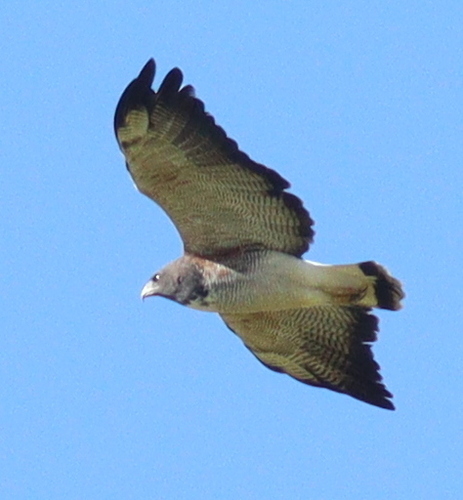
White-tailed Hawk
Buteo albicaudatus

Zone-tailed Hawk
Buteo albonotatus
Global Distribution
Warmer areas are where this animal is recorded most often.
Parks Where Found
Quick answers
What are the chances of seeing a Black Vulture in Tijuca National Park?
About 60% of wildlife watchers report a Black Vulture sighting in Tijuca National Park, based on 1,107 verified sightings from GBIF citizen-science data.
When is the best time to see Black Vulture in Tijuca National Park?
September has the highest sighting rate for Black Vulture in Tijuca National Park in our monthly data.