


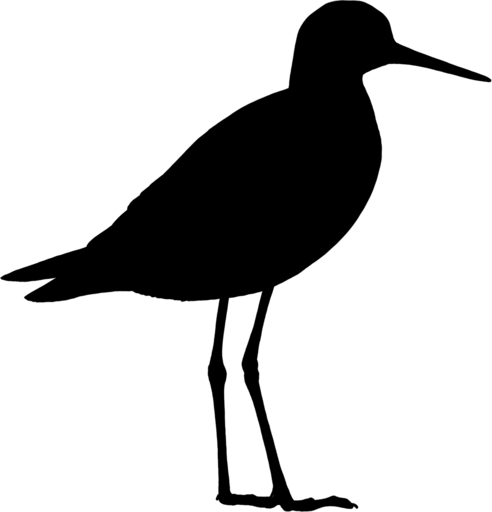
Solitary Sandpiper
Tringa solitaria
Silhouette: Andy Wilson · PhyloPic
- KingdomAnimalia (Animals)
- PhylumChordata (Chordates)
- ClassAves (Birds)
- OrderCharadriiformes (Shorebirds and Allies)
- FamilyScolopacidae (Sandpipers and Allies)
- GenusTringa (Shanks, Tattlers, and Allies)
- SpeciesTringa solitaria (Solitary Sandpiper)
About the Solitary Sandpiper
The solitary sandpiper (Tringa solitaria) is a small shorebird. The genus name Tringa is the Neo-Latin name given to the green sandpiper by Aldrovandus in 1599 based on Ancient Greek trungas, a thrush-sized, white-rumped, tail-bobbing wading bird mentioned by Aristotle. The specific solitaria is Latin for "solitary" from solus, "alone".
This species measures 18–23 cm (7.1–9.1 in) long, with a wingspan up to 50 cm (20 in) and a body mass of 31–65 g (1.1–2.3 oz). It is a dumpy wader with a dark green back, greyish head and breast and otherwise white underparts. It is obvious in flight, with wings dark above and below, and a dark rump and tail centre. The latter feature distinguishes it from the slightly larger and broader-winged, but otherwise very similar, green sandpiper (T. ochropus) of Europe and Asia, to which it is closely related. The latter species has a brilliant white rump. In flight, the solitary sandpiper has a characteristic three-note whistle. They both have brown wings with little light dots, and a delicate but contrasting neck and chest pattern. In addition, both species nest in trees, unlike most other scolopacids.
It breeds... Wikipedia →
Recent sightings of Solitary Sandpiper in Tayrona National Natural Park
LIVEiNaturalistClosest Relatives at Tayrona National Natural Park

 Greater Yellowlegs
Tringa melanoleuca

 Willet
Tringa semipalmata

 Lesser Yellowlegs
Tringa flavipes

 Spotted Sandpiper
Actitis macularius

 Hudsonian Whimbrel
Numenius hudsonicus

 Sanderling
Calidris alba

 Least Sandpiper
Calidris minutilla

 Red Knot
Calidris canutus

 Whimbrel
Numenius phaeopus

Pectoral Sandpiper
Calidris melanotos

 Royal Tern
Thalasseus maximus

 Southern Lapwing
Vanellus chilensis
Global Distribution
Warmer areas are where this animal is recorded most often.
Parks Where Found
Quick answers
What are the chances of seeing a Solitary Sandpiper in Tayrona National Natural Park?
Under 5% of wildlife watchers report a Solitary Sandpiper sighting in Tayrona National Natural Park, based on 35 verified sightings from GBIF citizen-science data.
When is the best time to see Solitary Sandpiper in Tayrona National Natural Park?
August has the highest sighting rate for Solitary Sandpiper in Tayrona National Natural Park in our monthly data.